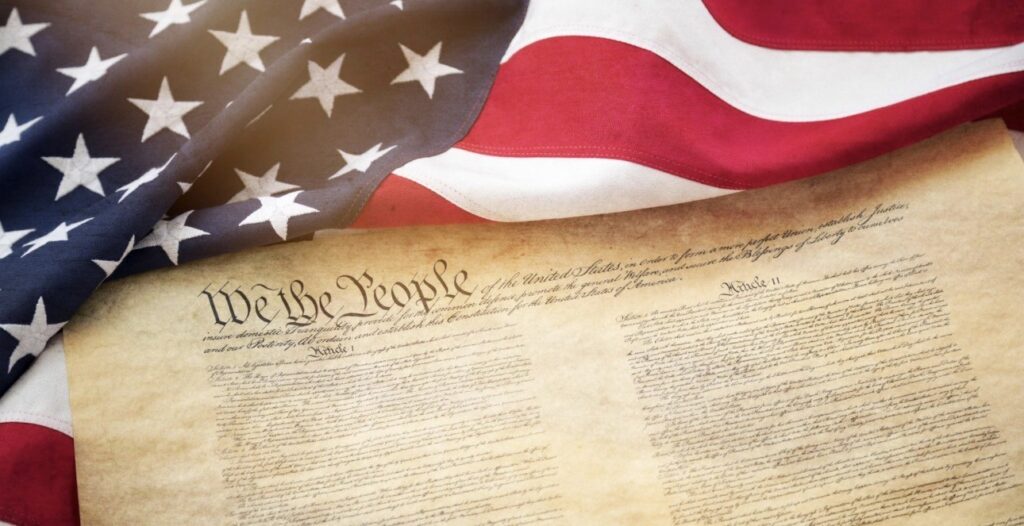
America has never been afraid of political debate. Disagreement is one of the defining features of our democracy, and Americans argue passionately about elections, presidential power, immigration, gun rights, abortion, freedom of speech, taxes, and countless other issues. Political disagreement is not the problem.
The problem is that too many constitutional arguments begin without a basic understanding of what the Constitution says.
Too often, people begin with political beliefs rather than constitutional knowledge. They hear a politician, commentator, social-media personality, or friend make a constitutional claim and accept it because it supports what they already believe. That is backwards. If we are going to debate what the government can and cannot do, we should first understand the document that establishes the framework of our government.
The Constitution Belongs to the People
The Constitution is not reserved for lawyers, judges, politicians, or constitutional scholars. It belongs to the American people.
It begins with the words “We the People,” a phrase that reminds us that government derives its authority from the citizens it serves.
Because of that, citizens have a responsibility to understand, at least at a basic level, the document that defines both the powers and the limits of their government.
You do not need a law degree to understand the Constitution. You do need to read it.
Opinions Are Different from Constitutional Facts
One of the biggest problems in modern political discussion is the failure to distinguish between an opinion about the Constitution and what the Constitution says. For example, someone might claim, “The president has the constitutional authority to do that.” But where is that authority found?
Is it specifically granted to the president? Is it authority given to Congress? Is it limited by another constitutional provision? Has the Supreme Court interpreted the provision in question? These are important questions.
Simply saying something is “constitutional” does not make it constitutional. Likewise, saying something is “unconstitutional” does not automatically make it unconstitutional.
Constitutional questions can be complicated, and reasonable people can disagree about how specific provisions should be interpreted. But disagreement should begin with the actual text, not with political talking points.
Read the Document Before Taking Sides
Imagine arguing about a book you have never read. You might have heard what the book is about, watched someone discuss it online, or formed strong opinions about the author. But if you have never read the book, how confidently can you argue about what is written inside it?
The same principle should apply to the Constitution.
Before arguing about the First Amendment, read the First Amendment. Before debating presidential powers, look at Article II. Before arguing about Congress, read Article I. Before discussing the rights of the accused, review the Fourth, Fifth, Sixth, and Eighth Amendments.
Before discussing voting rights, examine the constitutional amendments addressing voting and the relevant federal laws. The Constitution is not impossibly long. Americans can read it for themselves.
Social Media Has Made the Problem Worse
Social media has made political information easier to access, but it has also made misinformation easier to spread. A short video can take a complicated constitutional issue and reduce it to a few seconds. A viral post can make a sweeping constitutional claim without offering any evidence.
A political influencer can confidently declare that something is constitutional or unconstitutional, and thousands of people may repeat the claim without ever checking the source. In that environment, confidence can be mistaken for knowledge.
We should be more skeptical. Before sharing a constitutional claim, ask: Where does the Constitution say that? That simple question could improve political conversations across the country.
Constitutional Literacy Should Be Civic Responsibility
We often encourage young people to learn about American history, government, and civics. But constitutional knowledge should not end when someone graduates from school.
Citizens vote, elect members of Congress and presidents, influence state and local governments, serve on juries, and participate in public debates. If we expect citizens to participate meaningfully in a constitutional republic, then understanding the basic structure of that republic should be part of responsible citizenship.
We should know the three branches of government, understand checks and balances, recognize the separation of powers, know what the Bill of Rights protects, and remember that the Constitution places limits on government power.
We Can Disagree Without Being Ignorant
Learning the Constitution does not mean everyone will reach the same political conclusion. That is not the goal. Two people can read the same constitutional provision and disagree about how it should be interpreted.
Constitutional interpretation has been debated throughout American history. But there is an enormous difference between saying, “I understand the constitutional argument, but I disagree with it,” and saying, “The Constitution obviously says this,” without ever examining the text.
Knowledge makes disagreement stronger. It allows us to challenge arguments with evidence instead of insults. It helps us recognize when politicians are accurately describing constitutional authority and when they may be stretching the truth. It also allows citizens to hold their own political side accountable.
The Constitution Should Come Before Politics
Americans do not have to agree politically. We never have, and we probably never will. But disagreement is healthier when it is rooted in facts instead of slogans. On constitutional questions, the starting point should not be a party platform, a television segment, or a viral post. It should be the Constitution itself.
Before we accuse a president of violating the Constitution, we should understand the president’s constitutional powers. Before we accuse Congress of exceeding its authority, we should understand Congress’s constitutional responsibilities.
Before we claim that a particular right is protected by the Constitution, we should know where that protection comes from. And before we declare that someone else “doesn’t understand the Constitution,” we should make sure we understand it ourselves.
Our political debates would be stronger if more Americans replaced “I heard someone say…” with “I read the Constitution, and here is what it says.” That one shift would not end disagreement, but it would raise its quality.
That is not asking Americans to become constitutional lawyers. It is asking us to become informed citizens. The Constitution is too important to be reduced to a political slogan, and citizenship is too important to be practiced on autopilot.
Read it. Study it. Question it. Debate it fiercely if you must. But before we argue about the Constitution, we owe it to the country—and to one another—to know what it says.