Rising Gas Prices: Why Americans Are Paying More at the Pump
By PVAL News
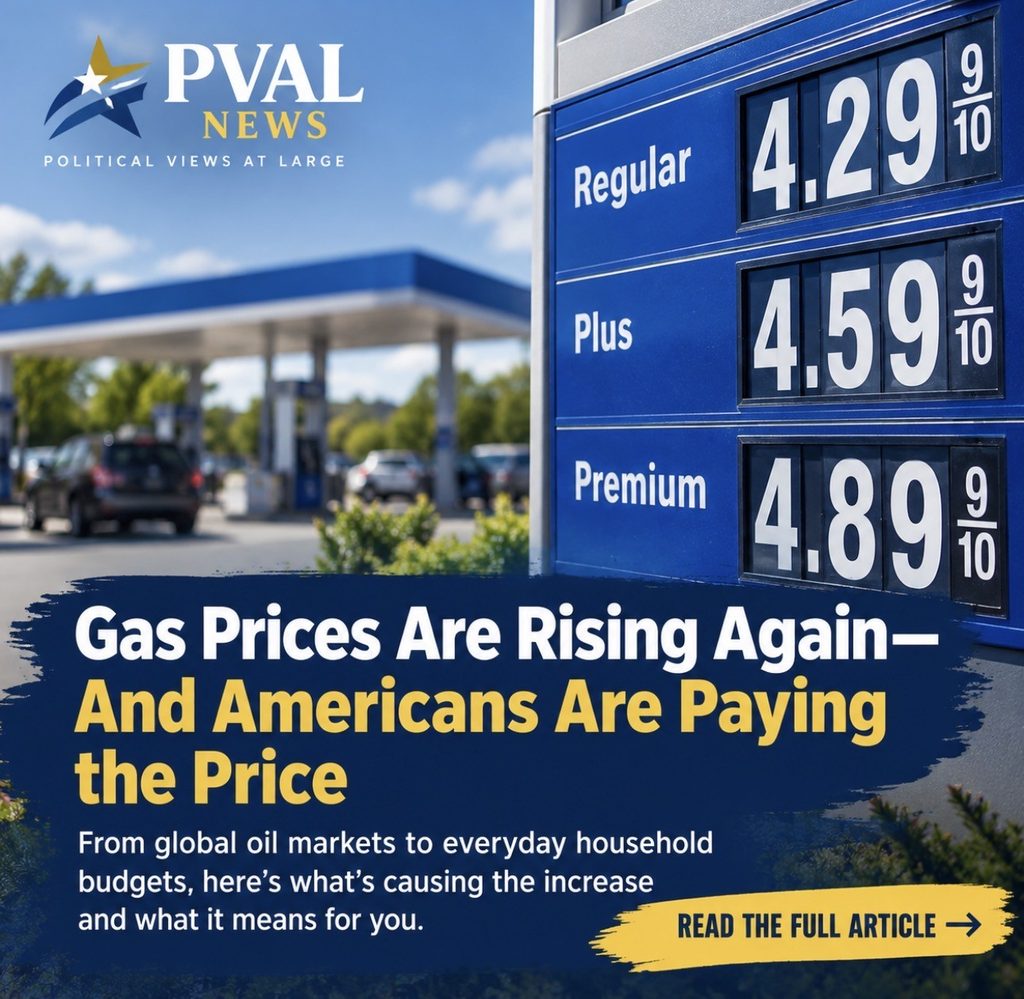
For millions of Americans, filling up the gas tank has once again become a financial burden. Gasoline prices have climbed sharply in 2026, with the national average reaching roughly $4.20 per gallon in early September. Over Labor Day weekend, the national average reached approximately $4.14 per gallon-setting a record for the holiday and surpassing the earlier Labor Day record of $3.82 set in 2012. (AP News)
For working families, commuters, small businesses and anyone who depends on a vehicle, higher gas prices are about more than the cost of filling a tank. They can affect nearly every part of the household budget. Why Are Gas Prices Rising? The biggest factor behind the latest increase is the price of crude oil.
Crude oil is the primary raw material used to produce gasoline. When the price of oil rises, the increase eventually makes its way to consumers at the pump. Right now, global oil markets are facing significant disruptions because of the ongoing conflict involving the United States and Iran. Oil shipments through the Strait of Hormuz-a critical route for global petroleum supplies-have been severely disrupted.
The situation became even more concerning this week as attacks involving energy infrastructure in the Middle East increased fears that additional supplies could be taken off the global market. Brent crude oil moved above $100 per barrel on September 9. (Reuters) That matters to American drivers because the United States takes part in a global oil market. Even though America produces large amounts of oil domestically, gasoline prices are still influenced by international crude oil prices.
It is Not Just the Price of Oil
Crude oil is not the only factor affecting what Americans pay at the pump. Refineries must turn crude oil into gasoline and diesel, and disruptions to refinery operations can put added pressure on prices.
Global refinery capacity has also been strained. Problems involving facilities in the Middle East, Russia and China have contributed to tighter supplies of refined petroleum products. U.S. refineries have been running at high levels, while demand for American fuel exports has also increased. (MarketWatch) That combination creates a difficult situation: Americans are competing in a global market for a product that is becoming more expensive to produce and transport.
The Cost Goes Beyond the Gas Pump.
Higher gasoline prices don’t stop at the gas station. Transportation is connected to almost everything Americans buy. Trucks need diesel to transport food and other products. Businesses use fuel to move supplies. Workers spend money commuting to their jobs. Airlines use jet fuel to transport passengers and cargo. When transportation becomes more expensive, businesses can eventually pass some of those costs on to consumers. That means rising fuel prices can contribute to higher prices for groceries, clothing, manufactured goods and other everyday necessities.
Diesel prices are particularly concerning. The national average recently reached approximately $5.90 per gallon, creating additional pressure on the transportation and shipping industries. (The Wall Street Journals)
Americans Are Feeling the Pressure
For someone who drives 20 gallons a week, a $4.20-per-gallon gasoline price means spending about $84 a week on fuel. That is roughly $336 a month-and about $4,368 a year if that price remains constant. For families with multiple vehicles, long commutes or jobs that require extensive driving, the impact can be even greater.
Higher gas prices can force people to make difficult choices:
- Drive less.
- Cancel vacations or road trips.
- Reduce spending on restaurants and entertainment.
- Delay purchases.
- Find additional work.
- Cut back on other household expenses.
For lower- and middle-income households, these decisions can be particularly difficult because gasoline is often not an optional expense.
Is This a Political Problem?
It can be. Gasoline prices have historically been politically sensitive because Americans see them every time they visit a gas station. The current situation is particularly significant because the United States is approaching the 2026 midterm elections.
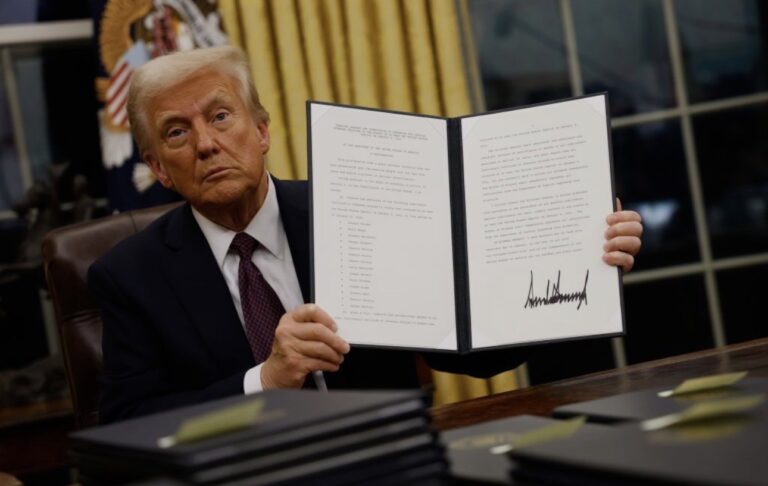
President Donald Trump has acknowledged that the oil-price problem may not ease until after the November elections. At the same time, the administration faces pressure to address energy costs while dealing with a complicated international conflict. (AP News 1) This creates an important political question: How much control does the president actually have over gasoline prices? The answer is complicated.
A president can influence energy policy, domestic production, sanctions, strategic petroleum reserves and international relations. But gasoline prices are also influenced by global crude oil prices, refinery capacity, transportation infrastructure, market demand and geopolitical events.
That means no president has complete control over the price Americans see on the gas station sign. America’s Energy Security Question: The current crisis also raises a larger question about America’s energy security. The United States is one of the world’s major oil producers, but oil is traded through a global marketplace. A disruption thousands of miles away can therefore affect American consumers.
A president can influence energy policy, domestic production, sanctions, strategic petroleum reserves and international relations. But gasoline prices are also influenced by global crude oil prices, refinery capacity, transportation infrastructure, market demand and geopolitical events.
That means no president has complete control over the price Americans see on the gas station sign. America’s Energy Security Question. The current crisis also raises a larger question about America’s energy security. The United States is one of the world’s major oil producers, but oil is traded through a global marketplace. A disruption thousands of miles away can therefore affect American consumers.
A president can influence energy policy, domestic production, sanctions, strategic petroleum reserves and international relations. But gasoline prices are also influenced by global crude oil prices, refinery capacity, transportation infrastructure, market demand and geopolitical events.
That means no president has complete control over the price Americans see on the gas station sign. America’s Energy Security Question. The current crisis also raises a larger question about America’s energy security. The United States is one of the world’s major oil producers, but oil is traded through a global marketplace. A disruption thousands of miles away can therefore affect American consumers.
The Energy Information Administration has raised its 2026 oil-price forecast because of declining global inventories and continued disruptions to Middle Eastern supplies. The agency expects some production and export disruptions to continue into 2027. (Reuters) The situation demonstrates an important reality: Energy independence and energy security are not necessarily the same thing. Producing more oil domestically can strengthen America’s energy position, but the country remains connected to the international energy market.
What Happens Next?
The biggest question for consumers is simple: Will gas prices come back down? That depends heavily on what happens to global oil supplies. If the conflict in the Middle East de-escalates, shipping routes reopen and oil production returns to normal levels, prices could eventually fall. However, if disruptions continue, the pressure could remain.
Reuters reported September 9 that Brent crude had risen about 25% since early August and that roughly 10 million barrels per day of oil exports were still missing from the global market because of the conflict. (Reuters) That leaves the global energy market vulnerable to additional disruptions.
The Bottom Line
Rising gas prices are not simply a problem at the pump. They are a reminder of how closely connected foreign policy, energy markets, inflation and household finances really are. For Americans already struggling with the cost of living, another increase in gasoline prices can mean less money for groceries, rent, utilities and other necessities.
The political debate will likely focus on who is responsible and what the government should do. But beyond the politics, one fact remains: When energy prices rise, Americans feel it throughout the economy-not just when they fill up their cars.
When energy prices rise, Americans feel it throughout the economy-not just when they fill up their cars. And with oil prices once again approaching and, in some cases, exceeding $100 per barrel, the question facing the country is no longer simply how much gasoline will cost tomorrow.
It is how long American households can afford to keep paying the price.
Sources
- U.S. Energy Information Administration (EIA) — Oil and gasoline market data and the agency’s latest outlook on global oil supplies and prices. U.S. Energy Information Administration
- Reuters — “US EIA hikes oil price forecasts as Iran war drains global stockpile” Covers the ElA’s updated oil-price projections and the disruption to Middle Eastern oil supplies.
- Associated Press — “Fuel prices at record Labor Day high in US thanks to Iran war and refinery issues” – Reports that U.S. gasoline prices reached a record Labor Day level and examines the factors driving the increase.
- AAA — Gas Prices — Provides current national and state gasoline-price averages. AAA Gas Prices
- U.S. Department of Energy – Alternative Fuels Data Center Provides information and data about fuel prices and transportation energy. Alternative Fuels Data Center
- Choose Energy September 2026 Gas Prices by State, Compiles September state-level gasoline prices using data from AAA, the Department of Energy and other government sources.