By PVAL News
A New Battle Over the 2026 Elections
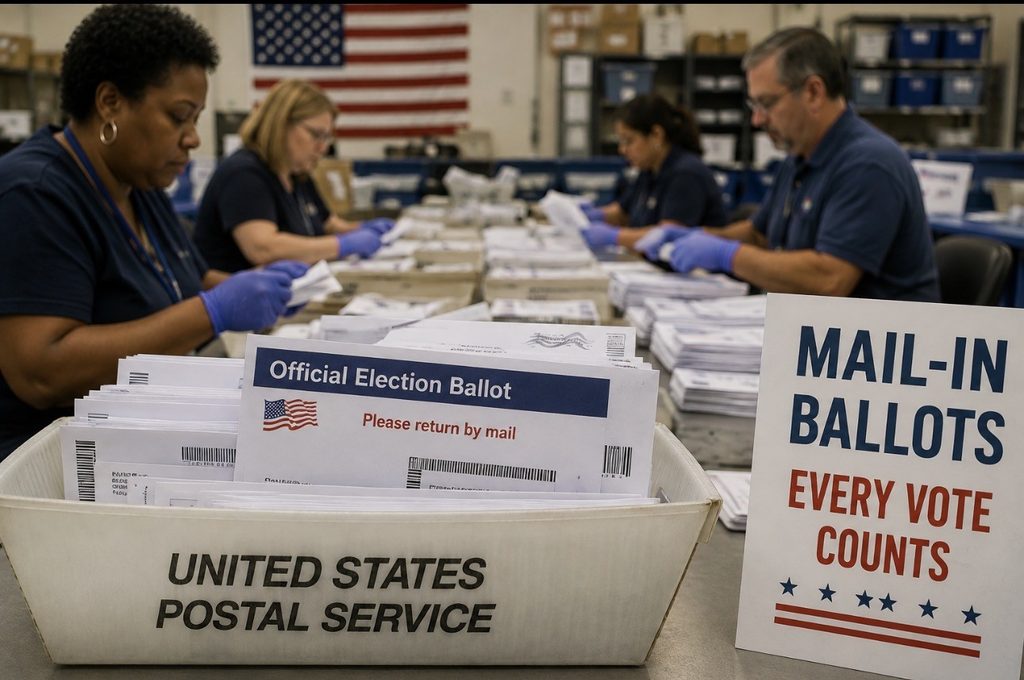
A fight over mail-in voting is quickly becoming one of the most important election-law battles ahead of the 2026 midterms. At stake is not only how millions of Americans may cast their ballots, but also how far presidential power can reach into the rules that govern federal elections.
But Democratic-led states and voting-rights organizations argue that the administration is going beyond the president’s constitutional authority and interfering with the states’ traditional role in administering elections. The dispute has now reached the courts, creating another major confrontation over the balance of power between the federal government and the states.
What Is Changing? Trump’s March 2026 executive order directed federal agencies to take several steps concerning federal elections, including measures involving citizenship verification and mail-in ballots.
The order called for changes to the handling of outbound ballot mail, including new envelope requirements and barcodes. It also directed the development of systems involving lists of eligible voters. According to the Supreme Court’s August 24 order, the executive order directed the Postal Service to begin rulemaking related to ballot-envelope tracking and other mail-ballot procedures. That has raised concerns among state election officials because election administration has traditionally involved substantial state and local control. The changes also come with a significant timing problem: states are already preparing for the November elections, and some districts will soon begin sending ballots to voters.
The Supreme Court’s Role
The Supreme Court has already entered the dispute. On August 24, the Court issued an order that lifted an earlier lower-court injunction that had prevented parts of the administration’s plan from moving forward. However, the decision did not finally determine whether Trump’s executive order is constitutional. The Court wrote that its action did not mean every government measure taken to implement the order would necessarily be lawful. That distinction is important. The Supreme Court’s decision changed the legal landscape while the larger dispute continues. It did not mean that every aspect of the administration’s mail-voting plan had received final approval from the Court. The ruling has instead opened the door for more litigation.
States Fight Back
On August 26, Democratic attorneys general from 23 states and the District of Columbia, along with Pennsylvania’s governor, renewed their challenge to the administration’s mail-voting rules in federal court, according to Reuters. The states argue that the Postal Service lacks the authority to impose the new requirements and that the federal government is interfering with state election administration. They are asking the court to stop the rules from taking effect. The timing is particularly significant.
Election officials have limited time to adjust voting systems, train workers, acquire equipment and communicate changes to voters. Critics argue that introducing major changes so close to an election could create confusion for voters and election administrators. The administration, however, maintains that the changes are intended to protect election integrity.
Why This Matters to Voters
For many Americans, voting by mail is not simply a convenience. It can be particularly important for elderly voters, voters with disabilities, military personnel, people who work long hours, and residents who live far from polling locations. During the 2024 election, nearly 100 million mail ballots were handled by the Postal Service, and approximately 30% of voters cast their ballots by mail, according to Reuters. That means changes to the mail-ballot system could affect millions of Americans. The central question is therefore larger than whether someone prefers voting in person or by mail. It is about who has the constitutional authority to set the rules governing federal elections.
The Constitutional Question
The Constitution gives Congress significant authority over the “Times, Places and Manner” of congressional elections, while states traditionally administer elections. That creates an important constitutional question in this dispute: How much authority does a president have to change the administration of elections through an executive order?
Supporters of Trump’s actions argue that the federal government has a legitimate responsibility to protect federal elections and prevent ineligible voting.
Opponents argue that the president cannot simply take powers assigned by the Constitution to Congress and the states. The courts will have to figure out where that line exists.
What Happens Next?
The legal fight is far from over. The coalition of states challenging the USPS rule is seeking another court order to prevent implementation. Reuters reported that a September 3 hearing was scheduled to consider whether to issue a preliminary injunction that could halt the rule. Meanwhile, election officials are preparing for the possibility that the rules could change while they are already preparing for November. That uncertainty could become one of the most consequential election-administration disputes of the 2026 midterms.
Why PVAL News Is Watching: The mail-in voting controversy represents more than another partisan disagreement in Washington. It raises fundamental questions about federalism, presidential power, voting rights, and the constitutional structure of American elections. Regardless of political party, Americans should understand what is happening before casting judgment. The question is not simply whether mail-in voting should be easier or harder. The deeper question is: Who gets to decide how Americans vote? As the 2026 midterms approach, the courts may provide the answer.
PVAL News Takeaway
Election laws can have consequences far beyond Washington politics. When the rules governing how Americans cast their ballots are challenged in court, voters have a direct stake in the outcome. The battle over mail-in voting is therefore one that every voter should be watching. PVAL News will continue to follow this developing story as the courts consider the future of mail-in voting in America.
Sources: This article relies on the Supreme Court’s August 24, 2026, order in Trump v. California, Reuters reporting from August 25, 2026, and Reuters reporting from August 26, 2026 on the mail-in voting executive order, the USPS rule, and the renewed legal challenges.