By Charmaine | PVAL News
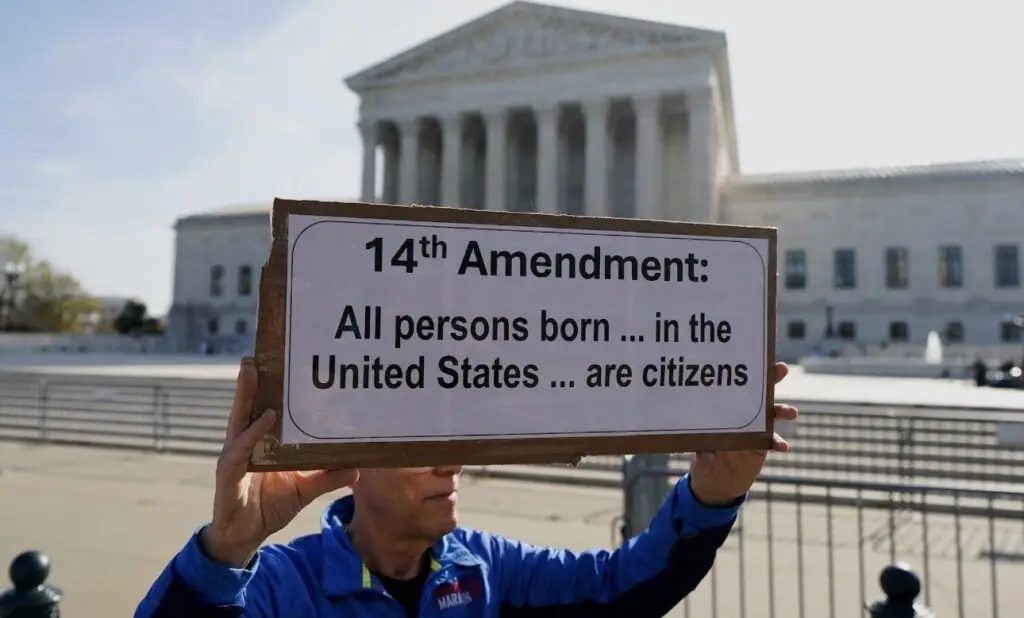
President Donald Trump has renewed his effort to restrict birthright citizenship, signing new executive orders just weeks after the U.S. Supreme Court rejected his earlier attempt to significantly limit the constitutional right. The move has reignited one of the nation’s most consequential debates over immigration, presidential power, and the meaning of the Fourteenth Amendment.
What Happened?
On August 6, 2026, President Trump signed two executive orders aimed at limiting automatic citizenship for certain children born in the United States. The new orders focus on narrower categories, including children connected to foreign governments, certain individuals classified as enemy aliens or members of foreign terrorist organizations, and situations involving alleged immigration or visa fraud associated with what the administration calls “birth tourism.” (AP
News 1) The new orders come after the Supreme Court’s June 30, 2026, decision rejecting Trump’s earlier attempt to restrict birthright citizenship.
That earlier executive order, signed by Trump on his first day back in office in January 2025, sought to deny automatic citizenship to certain children born in the United States when their parents were neither U.S. citizens nor lawful permanent residents.
The Supreme Court ultimately struck down that effort, holding that the Constitution protects birthright citizenship for nearly everyone born on U.S. soil. (Constitution Center 7)
What Does the Fourteenth Amendment Say?
The debate centers on the Citizenship Clause of the Fourteenth Amendment, which was ratified in 1868.
The amendment states: “All persons born or naturalized in the United States, and subject to the jurisdiction thereof, are citizens of the United States.”
For more than a century, this provision has generally been understood to mean that people born in the United States are automatically U.S. citizens, with limited historical exceptions such as children of foreign diplomats. The Supreme Court’s recent decision reaffirmed a broad interpretation of this constitutional protection. (Constitution Center 7)
Can a President Change the Constitution with an Executive Order?
This is where the constitutional debate becomes particularly important. An executive order can direct the executive branch administers existing laws, but it cannot simply override the Constitution.
The Supreme Court’s June ruling presents a significant legal obstacle to Trump’s renewed effort. The administration argues that the latest orders are narrower and address specific circumstances that it believes fall outside the constitutional guarantee. Critics, however, argue that the new orders still conflict with the Fourteenth Amendment and the Supreme Court’s interpretation of birthright citizenship. Legal challenges are expected. (AP News 1)
Why This Matters
The controversy is about much more than immigration policy. At its core, the issue raises a fundamental constitutional question: Who has the authority to decide who is an American citizen-the president, Congress, or the Constitution itself?
Supporters of Trump’s position argue that the United States should have greater control over immigration and should prevent people from exploiting citizenship laws through practices such as birth tourism.
Opponents argue that allowing a president to narrow constitutional citizenship protections through executive action could set up a dangerous precedent for presidential power.
The disagreement is therefore not simply about immigration. It is also about the separation of powers and the limits of executive authority.
The Bigger Constitutional Question
The Fourteenth Amendment was adopted following the Civil War and was designed in significant part to set up a constitutional guarantee of citizenship.
That history is important because changing the meaning of a constitutional provision is fundamentally different from changing an ordinary federal law.
Congress can pass legislation, and presidents can issue executive orders, but the Constitution is still the supreme law of the land. When executive action conflicts with constitutional protections, the courts have the authority to review and reject that action. That is precisely what happened with Trump’s earlier birthright citizenship order.
What Happens Next?
Trump’s latest executive orders are likely to face legal challenges, setting up another potentially significant constitutional battle.
The courts will have to decide whether the administration’s narrower approach is legally different enough from Trump’s earlier order to survive judicial review, or whether it is another attempt to carry out through executive action what the Supreme Court has already rejected. For Americans, the debate offers an important reminder that constitutional government is built on more than presidential power.
It is built on checks and balances, separation of powers, judicial review, and the Constitution itself.
PVAL News Perspective
The birthright citizenship controversy is a critical issue for Americans to follow because it sits at the intersection of immigration, constitutional law, and presidential authority. Regardless of where someone stands politically, understanding what the Constitution says, what the Supreme Court has ruled, and what an executive order can legally conduct is essential to understanding the debate.
The question now is not simply whether President Trump supports restricting birthright citizenship.
The larger question is: Can a president redefine a
constitutional right through executive action after the Supreme Court has ruled against the broader effort?
The question now is not simply whether President Trump supports restricting birthright citizenship. The larger question is: Can a president redefine a constitutional right through executive action after the Supreme Court has ruled against the broader effort?
That question may once again be left to the courts to decide.
Sources & Further Reading
News & Reporting
- Reuters: Trump signs orders to limit
US birthright citizenship, despite
Supreme Court ruling. - Associated Press: Trump again tries to restrict birthright citizenship after Supreme Court ruling^
Primary Sources
- U.S. Supreme Court: Trump v.
Barbara – June 30, 2026, 1 - National Archives: The Fourteenth Amendment to the U.S. Constitution
PVAL News provides sources to promote transparency and encourage readers to examine the original information. The inclusion of a source does not necessarily mean PVAL News endorses the source’s opinions or conclusions.