Understanding the First Ten Amendments to the U.S. Constitution
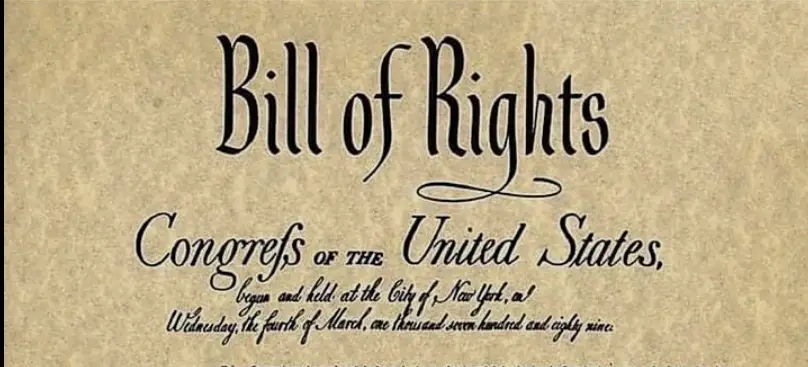
The United States Constitution establishes the framework of the federal government, but it also places important limits on government power. Among the most important protections in the Constitution are the Bill of Rights, the first ten amendments to the Constitution. The Bill of Rights was ratified on December 15, 1791, following concerns that the newly created federal government could become too powerful and infringe upon individual liberties.
Today, these ten amendments are still a fundamental part of American democracy.
What Is the Bill of Rights?
The Bill of Rights is the name given to the first ten amendments to the U.S. Constitution. When the Constitution was originally written in 1787, it did not contain a detailed list of individual rights. Some Americans were concerned that the new federal government could become too powerful.
The First Amendment: Freedom of Expression
The first ten amendments were ratified in 1791.
The First Amendment protects several fundamental freedoms:
- Freedom of religion
- Freedom of speech
- Freedom of the press
- The right to peacefully assemble.
- The right to petition the government.
The First Amendment begins: “Congress shall make no law respecting an establishment of religion, or prohibiting the free exercise thereof…”
These freedoms allow Americans to express opinions, practice their faith, criticize government officials, protest peacefully, and take part in public debate. The First Amendment is one of the foundations of American political life.
The Second Amendment: The Right to Keep and Bear Arms
The Second Amendment protects the right to keep and bear arms.
It says: “A well-regulated Militia, being necessary to the security of a free State, the right of the people to keep and bear Arms…”
The meaning and scope of the Second Amendment have been the subject of intense political and legal debate for generations.
The Third Amendment: Protection Against Quartering Soldiers
The Third Amendment prohibits the government from forcing Americans to house soldiers in their homes during peacetime without the owner’s consent.
The amendment states:
“No Soldier shall, in time of peace be quartered in any house, without the consent of the Owner.”
Although this amendment may seem less relevant today, it reflects historical concerns about government power and the experiences of Americans before the Revolutionary War.
The Fourth Amendment: Protection Against Unreasonable Searches
The Fourth Amendment protects people against unreasonable searches and seizures.
It says:
“The right of the people to be secure in their persons, houses, papers, and effects…”
This amendment is particularly important in today’s world because privacy can involve much more than a physical home.
Questions involving cellphones, electronic communications, location information, and digital data have created new challenges for interpreting Fourth Amendment protections.
The Fifth Amendment: Rights of the Accused
The Fifth Amendment provides several important protections for people accused of crimes. Among them are protections against self-incrimination and being deprived of life, liberty, or property without due process of law.
The amendment states: “No person shall…be deprived of life, liberty, or property, without due process of law…”
The Fifth Amendment is also associated with the phrase “pleading the Fifth,” which refers to invoking the constitutional protection against compelled self-incrimination.
The Sixth Amendment: The Right to a Fair Trial
The Sixth Amendment protects important rights for people accused of crimes.
It begins: “In all criminal prosecutions, the accused shall enjoy the right to a speedy and public trial…”
These protections include the right to an impartial jury, to know the charges against you, to confront witnesses, to obtain witnesses in your defense, and to have help of legal counsel.
The Sixth Amendment reflects a fundamental principle of American justice: being accused of a crime does not mean that a person has been found guilty.
The Seventh Amendment: The Right to a Jury Trial in Certain Civil Cases
The Seventh Amendment protects the right to a jury trial in certain federal civil cases.
It says: “In Suits at common law… the right of trial by jury shall be preserved…”
Unlike the Sixth Amendment, which primarily concerns criminal prosecutions, the Seventh Amendment concerns certain civil disputes.
The Eighth Amendment: Protection Against Excessive Punishment
The Eighth Amendment prohibits:
- Excessive bail
- Excessive fines
- Cruel and unusual punishments
It says: “Excessive bail shall not be required, nor excessive fines imposed, nor cruel and unusual punishments inflicted.”
This amendment places constitutional limits on how the government can punish people.
The Ninth Amendment: Rights Beyond Those Listed
The Ninth Amendment addresses an important question: Does the government only have to respect rights specifically written in the Constitution?
The amendment states: “The enumeration in the Constitution of certain rights shall not be construed to deny or disparage others retained by the people.”
In other words, the Constitution’s written list of rights should not automatically be understood as an exhaustive list of every right kept by the people.
The Tenth Amendment: Powers Reserved to the States and the People
The Tenth Amendment addresses the balance of power between the federal government, the states, and the people.
It says: “The powers not delegated to the United States by the Constitution… are reserved to the States respectively, or to the people.”
The Tenth Amendment is therefore an important part of America’s system of federalism—the division of governmental authority between the national government and the states.
Why Does the Bill of Rights Still Matter?
The Bill of Rights is more than a list of historical amendments.
It is one of the central ideas behind the American system of government: government power has limits. The rights protected by these amendments affect everyday life. They influence how Americans speak about politics, practice religion, protest, interact with law enforcement, defend themselves in court, and participate in their communities and in American democracy.
The Constitution establishes the structure of government. The Bill of Rights reminds us that government has limits—and individual liberty matters.
PVAL News Perspective
At PVAL News, we believe that an informed citizen is an empowered citizen.
Before accepting a political claim about your constitutional rights, take the time to read the Constitution, examine reliable sources, and understand the history behind the issue.
Know the Constitution. Know your rights. Know your voice.