Why the $5,000 Checks Are Far From Guaranteed
By PVAL News
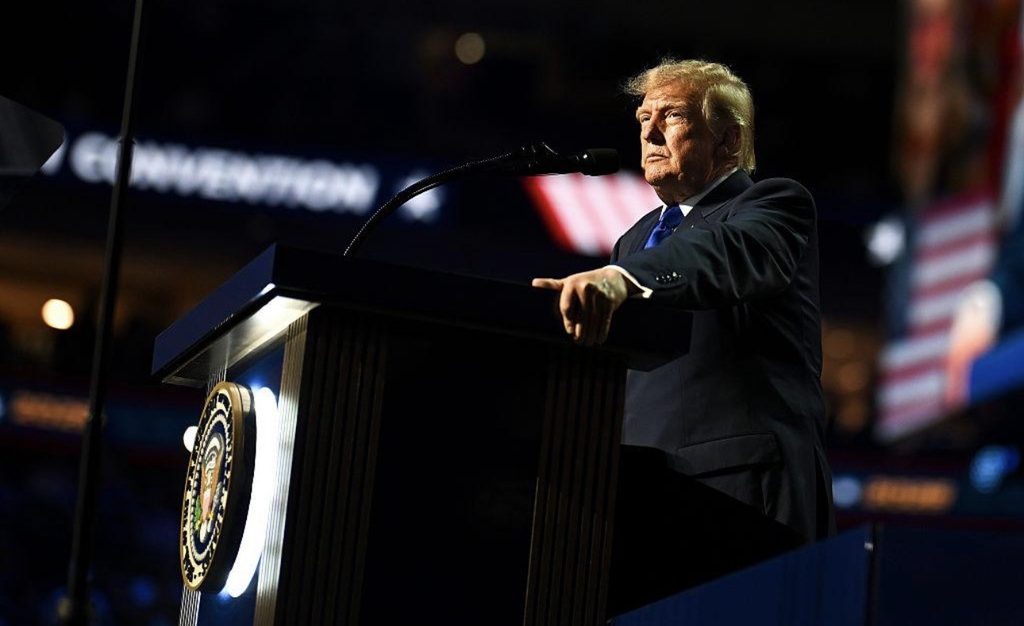
President Donald Trump has made a new promise to American voters: If Republicans keep control of both the U.S. House of Representatives and the Senate in the 2026 midterm elections, every adult U.S. citizen could receive a $5,000 payment. Trump made the announcement on September 9, 2026, during the Republican Party’s midterm convention in Dallas. He described the payment as a “dividend” based on what he characterized as the country’s economic strength and success. (Reuters)
The proposal immediately raises two important questions: Can the president legally make this promise, and will Americans actually receive the money? The legal issue turns on an important distinction between making a political promise and offering money in exchange for a vote. Federal law makes it illegal to offer or provide money specifically to influence how a person votes. It says that a person may not make an expenditure to someone “to vote or withhold his vote” or to vote for or against a particular candidate. (Legal Information Institute)
However, legal experts cited by Reuters and the Associated Press say Trump’s $5,000 proposal is not automatically illegal simply because it is being announced before an election. The reason is that Trump has not explicitly said that an individual voter must vote for him or a Republican candidate in order to receive the money. His stated condition is that Republicans must win control of both chambers of Congress. In other words, the proposed benefit would theoretically go to eligible adults regardless of how an individual voted. That distinction matters.
The Supreme Court has previously recognized that political candidates can make promises involving future government benefits without those promises automatically becoming illegal vote-buying. (Reuters) So, while critics may describe the proposal as an attempt to influence voters, it is more legally accurate to say that the proposal raises concerns about the appearance of vote-buying rather than to state that Trump has already committed an illegal act. Trump cannot simply order the checks to be sent to Americans. There is another major issue that Americans should understand.
Even if the promise is not automatically illegal as campaign speech, a separate question remains: Who has the legal authority to approve and fund the payments?
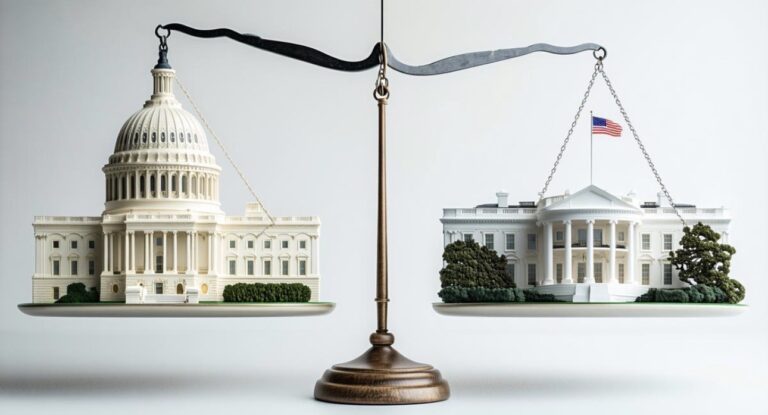
Even if Republicans win both chambers of Congress, Trump cannot simply order the federal government to send $5,000 checks to approximately 240 million adult Americans. Congress controls federal spending. Analysts estimate that the proposed payment would cost approximately $1.2 trillion, depending on eligibility rules and whether higher income Americans are excluded.
Trump’s announcement did not provide a detailed plan explaining exactly how the payments would be funded or administered. Vice President JD Vance has suggested that tariff revenue could help fund the payments. However, Reuters reported that the federal government is collecting far less in tariff revenue than would be necessary to finance a program of this size.
That means Congress would have to approve legislation authorizing the payments and figuring out how they would be funded. Winning an election does not automatically give a president the authority to spend $1 trillion or more. This is not the first time Trump has promised Americans money, and the history behind those promises helps explain why this proposal should be viewed carefully.
The White House later confirmed that Trump was committed to the idea and that his administration was examining how to implement it. However, the proposal never received congressional approval. (Reuters 7) Trump and his allies had also promoted the idea of a DOGE dividend. That proposal involved sending Americans thousands of dollars from savings supposedly generated by the Department of Government Efficiency. The idea was discussed publicly, but the promised checks did not materialize. (Business Insider) There is therefore an important distinction between promising money and actually delivering money.
Trump Has Promised Americans Money Before
Trump has previously discussed several direct-payment ideas: a $5,000 DOGE dividend, a $2,000 tariff dividend, the $1,776 Warrior Dividend, and now the $5,000 Trump Dividend. But there is an important distinction: the $5,000 DOGE dividend was discussed but never officially approved, while the $2,000 tariff dividend was proposed but never became a nationwide payment program. The $1,776 Warrior Dividend was different because Congress had already approved the legislation that funded it
it was funded through legislation Congress had already approved.
Some Promises Have Become Actual Payments
It is also important to be fair about Trump’s record. Not every payment associated with his administration has remained a proposal. In December 2025, approximately 1.45 million military service members received a $1,776 payment that became known as the “Warrior Dividend.” Unlike the proposed $5,000 payment, that money came from funding that Congress had already approved. (Reuters) The Trump administration has also pursued other forms of direct financial assistance.
That history means Americans should examine each proposal individually rather than assuming every promised payment will either happen or fail. The $5,000 promise is different. The newest proposal is considerably larger. Reuters estimates that giving $5,000 to roughly 240 million adult Americans would cost approximately $1.2 trillion. That is an enormous amount of money. For comparison, the proposal is substantially larger than Trump’s previously discussed $2,000 tariff dividend. It also comes at a time when the federal government is already running a large deficit.
Economists have warned that putting more than $1 trillion into the economy could increase inflationary pressure and borrowing costs, particularly if the government has to borrow money to finance the payments. The proposal therefore raises practical questions that Americans should watch carefully: Where would the money come from, who would qualify, and would Congress actually approve it? Trump’s proposal is currently a political promise, not an authorized federal payment program.
Americans should remember the difference between a presidential announcement and legislation passed by Congress. Trump previously promised Americans a $2,000 tariff dividend, but the government did not ultimately establish that program. He also supported discussions surrounding a much larger DOGE dividend that never became a nationwide payment program.
Now, Trump is offering voters another promise of direct financial relief, this time in the form of a $5,000 payment tied to the outcome of the 2026 congressional election.
Whether the proposal becomes reality will depend not simply on what the president promises, but on what Congress is willing and legally able to authorize.
The Bottom Line
Trump has promised a $5,000 “dividend” to adult Americans if Republicans keep control of both the House and Senate. The promise itself is not automatically illegal under federal vote-buying laws, because Trump has not conditioned the payment on an individual voter casting a particular ballot. However, the proposal raises legitimate questions about political influence, funding, and the separation between campaign promises and government spending. Most importantly, Trump cannot send $5,000 checks simply by announcing them. Congress would have to authorize the spending.
Given Trump’s history of promising Americans direct payments—including the previously proposed $2,000 tariff dividend and DOGE dividend. Americans have reason to ask a simple question: Will this promise become an actual check, or will it remain another promise made on the campaign trail?
Sources
- Reuters – “Trump promises $5,000 payout to U.S. adults if Republicans win election” – September 10, 2026.
- Reuters – “Is Trump’s $5,000 ‘dividend’ legal and how would it work?” – September 10, 2026.
- Associated Press – “Trump, hoping to salvage midterms, makes a dubious pledge to give every US adult $5,000 if GOP wins” – September 10, 2026.
- Reuters – Reporting on Trump’s previous proposal for a $2,000 tariff dividend and his January 2026 comments about whether congressional approval would be necessary.
- PolitiFact — Fact-check on the previously proposed $5,000 DOGE dividend and whether Trump had actually approved such payments.
- U.S. Census Bureau – Population and demographic data used to estimate the potential number of adults affected.
- Congressional Budget Office – Federal revenue and budget information relevant to the proposed payments.