By PVAL News
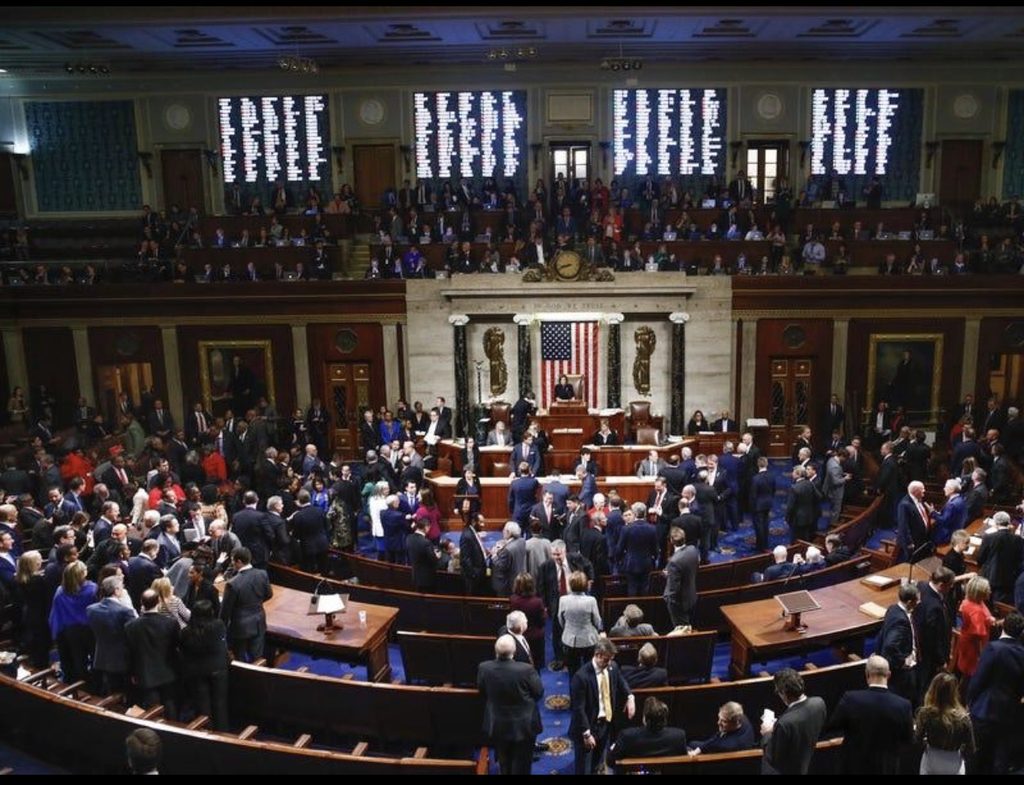
If removing a president were as simple as public anger, court challenges, or breaking-news headlines, the answer would be easy. But in the American system, outrage alone does not remove a president—the Constitution sets a much higher bar. President Donald Trump is still in office despite continuing political controversy, legal battles, congressional criticism, and renewed calls from some lawmakers and political leaders for his removal. That raises a question many Americans are asking: Why hasn’t Trump been removed from office? The answer begins with the Constitution. Removing a sitting president is intentionally difficult. The United States does not have a system in which Congress, the courts, or the public can simply vote a president out of office before his term ends because they disagree with his policies or believe he has abused his power.
As of August 2026, Trump is still president and is serving his second administration. The White House names him as the 45th and 47th president of the United States. (The White House) Impeachment Does Not Automatically Mean Removal
It does not.
The Constitution gives the House of Representatives the sole power of impeachment. A simple majority in the House is sufficient to approve articles of impeachment. The process then moves to the Senate, which conducts the impeachment trial. To actually convict and remove a president, however, the Senate must reach the much higher threshold of two-thirds of the senators present. (U.S. Senate) That distinction is critical.
A president can therefore be impeached by the House and still remain president if the Senate does not convict. Donald Trump has already experienced this process twice during his first presidency. The Senate acquitted him in both impeachment trials. In his second trial, 57 senators voted to convict, but the Constitution needed two-thirds, so the conviction threshold was not reached. (Congress.gov)
So Why Not Impeach Him Again?
There have been renewed calls for Trump’s impeachment during his second administration. In April 2026, for example, Democratic lawmakers and other political figures called for impeachment and discussed the possibility of invoking the 25th Amendment following Trump’s threats concerning Iran. (PBS News) But calls for impeachment are not the same thing as removal. For impeachment to result in removal, Congress would have to move through the constitutional process: the House would need to approve articles of impeachment, followed by a Senate trial and a two-thirds vote to convict. That means political support matters enormously.
Political Reality
The Constitution establishes the legal requirements, but politics inevitably affects whether those requirements can be met. Members of Congress belong to political parties, represent different constituencies, and face voters. Senators must decide whether the evidence and allegations justify removing a president even when doing so could have enormous consequences for their party and their careers. This is one reason congressional elections can become extremely important when questions about presidential accountability arise.
Recent reporting indicates that control of Congress is already a major issue heading into the 2026 midterm elections. Republican leaders have warned that a Democratic takeover of the House could lead to renewed impeachment efforts against Trump. (Fox News)
In other words, the November elections could significantly change the political environment surrounding presidential oversight.
What About the 25th Amendment?
Another possibility often mentioned is the 25th Amendment. However, the 25th Amendment is different from impeachment. Section 4 provides a mechanism for addressing a president who is unable to discharge the powers and duties of the office. It begins with the vice president and a majority of the principal executive officers declaring that the president is unable to perform those duties. The vice president then becomes Acting President. (Congress.gov) If the president disputes the declaration, the matter can ultimately go to Congress, where a two-thirds vote of both the House and Senate is required for the vice president to continue exercising presidential powers under Section 4. (Congress.gov) That makes the 25th Amendment a remarkably high bar as well. It is also important to understand that the 25th Amendment was designed primarily to address presidential inability, rather than simply providing another method for Congress to remove a president because of unpopular policies or political disagreements.
The Courts Are Different
Americans sometimes look at presidential actions that have been challenged in court and wonder why a court cannot simply remove the president. The judicial branch does not function that way. Courts can determine whether government actions comply with the Constitution and federal law. They can block or limit certain government actions when legally justified. But removing a sitting president from office is primarily a constitutional responsibility assigned to Congress through impeachment and, in a different circumstance, to the succession mechanisms of the 25th Amendment.
Recent events prove the continuing role of the courts in checking presidential power. For example, courts have continued to review challenges to Trump’s executive actions, including disputes involving voting procedures and birthright citizenship. (Reuters) A court ruling against a presidential policy, however, is not the same thing as removing the president from office.
The Bigger Question: What Is Enough to Remove a President?
This is where the debate becomes much more complicated. The Constitution says impeachment can involve “Treason, Bribery, or other high Crimes and Misdemeanors.” The Constitution does not provide a simple checklist defining every action that qualifies as “high Crime or Misdemeanor.” The meaning has therefore been debated throughout American history. (U.S. Senate) That leaves Congress with an enormous responsibility. The question is not simply: “Do you like the president?” It is: “Has the president committed conduct serious enough to justify the extraordinary constitutional remedy of removal from office?” Those are two very different questions.
Accountability Still Exists
The fact that a president has not been removed does not mean the president is immune from accountability. Congress can conduct investigations, hold hearings, subpoena witnesses, pass legislation, control funding, and exercise other constitutional powers. The courts can review executive actions. The states can challenge federal policies in court. And voters can decide who represents them in Congress and who occupies the White House. The Constitution deliberately divides governmental power among multiple institutions. That can make government slower and more frustrating, but it also prevents one institution from possessing unlimited power.
The Bottom Line
So, why haven’t they removed Trump yet? Because removing a president requires much more than public outrage, political opposition, criminal allegations, controversial executive orders, or calls for resignation. Under the impeachment process, the House must impeach and the Senate must convict by a two-thirds vote of senators present.
The 25th Amendment has its own demanding requirements and addresses presidential inability rather than functioning as a general political removal mechanism. (U.S. Senate) Trump’s continued presidency therefore illustrates one of the central features of the American constitutional system: presidential power can be challenged, limited, investigated, and opposed—but removing a president requires the constitutional institutions responsible for that task to act and to meet strict voting thresholds.
In short, the question is not simply whether a president has acted controversially or whether many people believe he should leave office. The real question is whether Congress concludes that the constitutional standard for removal has been met—and whether enough members are willing to vote that way. Until that happens, removal is still a constitutional process, not a reaction to headlines, social media, cable news, or public opinion alone.
Sources
White House. “President Donald J. Trump.” The White House. https://www.whitehouse.gov/administration/donald-j-trump/
U.S. Senate. “About Impeachment.” United States Senate. https://www.senate.gov/about/powers-procedures/impeachment.htm
Congressional Research Service. “The Impeachment Process in the Senate.” Congress.gov, February 15, 2024. https://www.congress.gov/crs_external_products/R/PDF/R46185/R46185.8.pdf
U.S. Senate. “U.S. Senate Roll Call Votes 117th Congress – 1st Session.” United States Senate, February 13, 2021. https://www.senate.gov/legislative/LIS/roll_call_votes/vote1171/vote_117_1_00059.htm
Groves, Stephen; Lisa Mascaro; and Kevin Freking. “Democrats Grow Bolder on Talk About Removing Trump from Office After His Iran Threats.” PBS News, April 9, 2026. https://www.pbs.org/newshour/politics/democrats-grow-bolder-on-talk-about-removing-trump-from-office-after-his-iran-threats
Elkind, Elizabeth. “Trump Could Face Impeachment if Democrats Seize House Majority, GOP Leader Warns.” Fox News, August 20, 2026. https://www.foxnews.com/politics/trump-could-face-impeachment-democrats-seize-house-majority-gop-leader-warns
Cooke, Kristina; Andrew Chung; and Daniel Trotta. “Trump Signs Orders to Limit US Birthright Citizenship, Despite Supreme Court Ruling.” Reuters, August 7, 2026. https://www.reuters.com/world/trump-sign-orders-birthright-citizenship-axios-reports-2026-08-06/