By Charmaine Conliffe | PVAL News
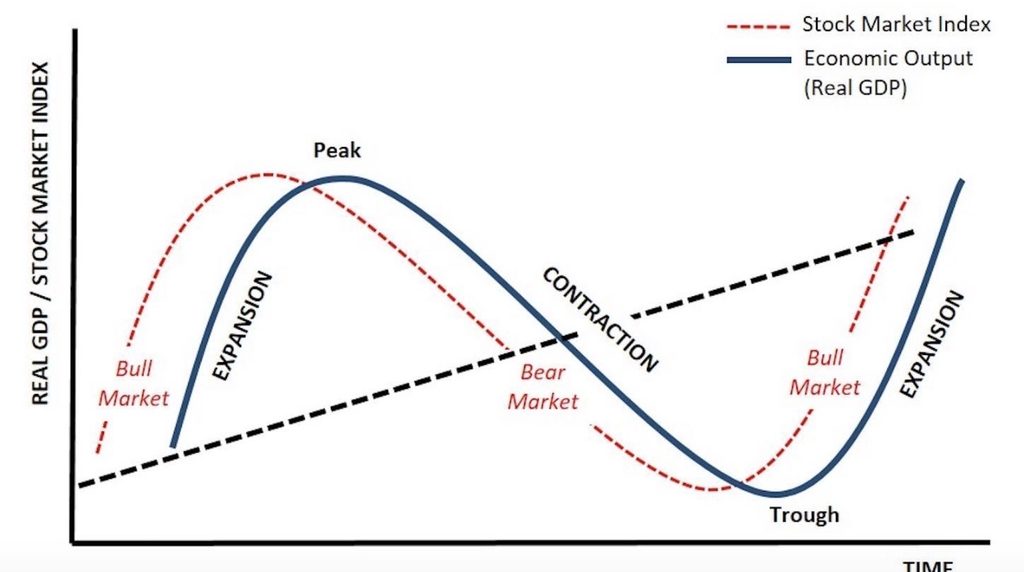
The economy does not move in a straight line. There are periods when businesses expand, employment grows, consumers spend more, and economic activity increases. There are also periods when economic activity slows, businesses become more cautious, unemployment can rise, and consumers reduce spending. These ups and downs are commonly described as the boom-bust cycle.
Economists more formally refer to these changes as business cycles, which include periods of economic expansion and contraction. The National Bureau of Economic Research (NBER) supports the chronology of U.S. business cycles by identifying economic peaks and troughs.
Understanding the boom-bust cycle is important because economic conditions can affect people’s jobs, wages, businesses, housing, investments, and everyday spending.
What Is an Economic Boom?
An economic boom generally refers to a period of strong economic growth and expanding economic activity. During an economic expansion, businesses may increase production, consumers may spend more, and companies may invest in new equipment, technology, buildings, and employees. One important measurement of economic activity is Gross Domestic Product, or GDP. According to the U.S. Bureau of Economic Analysis (BEA), GDP measures the value of the final goods and services produced in the United States. Changes in GDP are widely used as an indicator of how the overall economy is performing.
A strong expansion can create a positive cycle:
More economic activity → more business opportunities → more hiring → more consumer income → more spending.
But rapid economic growth can also create challenges. When demand for goods and services increases faster than businesses can supply them, prices may rise. Inflation can then become an important concern for policymakers.
What Is an Economic Bust?
The term “bust” is commonly used to describe a significant economic downturn or contraction. In formal U.S. economic terminology, however, the NBER uses the terms recession and expansion when describing business-cycle phases.
What Causes the Boom-Bust Cycle?
There is no single explanation for every economic expansion or contraction.
Several factors can influence economic conditions, including consumer spending represents a major part of economic activity. When households purchase more goods and services, businesses may respond by increasing production and investment.
Business Investment
Businesses make decisions about hiring, expansion, equipment, technology, and other investments. Changes in business investment can affect overall economic activity.
Interest Rates
Interest rates can influence borrowing and spending. The Federal Reserve explains that changes in the federal funds rate can affect other interest rates, credit conditions, economic activity, employment, and prices.
Inflation
Rapid increases in prices can affect household purchasing power and business costs. Inflation is therefore an important consideration when policymakers evaluate economic conditions.
Government Policy
Federal tax and spending decisions can influence economic activity. Congress and the president both play roles in the federal government’s fiscal policy.
Financial Conditions
Changes in lending, credit, financial markets, and investment can also affect businesses and consumers.
Unexpected Events
Wars, pandemics, natural disasters, supply disruptions, financial crises, and other unexpected events can cause significant changes in economic activity. Because these factors can overlap, deciding why an economy expanded or contracted can be complicated.
Real-World Example: The Housing Boom and the Great Recession
A clear example of a boom-bust cycle is the U.S. housing market in the 2000s. During the boom, home prices, housing construction, and mortgage borrowing expanded rapidly. Rising home values made many households feel wealthier, while lenders and investors became more active in housing-related finance.
But when the housing market weakened, the downturn spread beyond real estate. Falling home prices, rising mortgage losses, tighter credit, and financial-market stress contributed to the Great Recession, which lasted from December 2007 to June 2009. The example shows how a boom in one major part of the economy can build momentum, but also how a sudden reversal can affect jobs, spending, financial markets, and confidence.
How Do We Know When a Recession Happens?
One common misconception is that a recession automatically means two consecutive quarters of declining GDP. That is not the formal NBER definition. The NBER considers a variety of economic indicators, including employment, personal income, industrial production, sales, and measures of GDP and gross domestic income. The NBER also explains that recessions and expansions describe the direction of economic activity, rather than simply whether the economy is at a high or low level. This distinction matters because one economic indicator by itself does not always tell the complete story.
Does the President Control the Economy?
This is where economics becomes political. Presidents often receive credit when the economy is strong and blame when the economy is weak. That may be understandable because presidents are the most visible political leaders. But visibility is not the same as control. The president can influence the economy, but no president controls the entire U.S. economy alone.
Economic conditions are shaped by many forces at once, including consumer behavior, business investment, congressional action, Federal Reserve decisions, financial markets, global events, and unexpected crises. The Federal Reserve independently conducts monetary policy, while Congress and the president shape fiscal policy through laws, taxes, and federal spending.
Timing also matters.
A president may enter office during an expansion or downturn that began before that administration took power. Policies can take months or years to show their full effects, and policies passed under one administration can continue influencing the economy under the next. For that reason, it can be misleading to assign an entire boom or bust to one president or one political party without looking at the broader context.
Why Does the Boom-Bust Cycle Matter to Voters?
Understanding economic cycles can help voters evaluate political claims more carefully. During elections, politicians often point to economic statistics as evidence that their policies are working. Their opponents may point to different statistics to argue the opposite.
But economic performance should be examined in context.
Voters should consider questions such as:
- What was happening before the administration took office?
- What economic policies were implemented?
- How long would those policies reasonably take to affect the economy?
- What role did Congress play?
- What was the Federal Reserve doing?
- Were major international or domestic events affecting the economy?
- What do the broader economic indicators show?
Looking at these questions helps voters move beyond campaign slogans and ask a more useful question: not simply who was in office, but what policies were in place, what conditions already existed, and what outside events shaped the outcome.
The Bigger Picture
The boom-bust cycle is a reminder that the economy is constantly changing. Periods of economic expansion can eventually slow. Periods of contraction can eventually give way to recovery. The process is influenced by numerous forces operating at the same time. GDP, employment, income, production, consumer spending, inflation, interest rates, and other economic measures can all provide important pieces of the story.
That is why understanding the economy requires looking beyond political slogans. Before we decide who deserves credit or blame, we should first understand what happened and why.
What Comes Next?
The next question is one that has been debated for decades:
Do Democrats and Republicans really control the economy, or do presidents receive too much credit and too much blame for economic conditions they inherit?
That is the question PVAL News will examine next.
Sources
National Bureau of Economic Research (NBER), Business Cycle Dating: Explains how the NBER identifies U.S. economic peaks, troughs, expansions, and recessions.
NBER Business Cycle Dating Procedure: Frequently Asked Questions: Explains the NBER’s recession definition and why the committee does not rely only on the “two consecutive quarters” rule.
U.S. Bureau of Economic Analysis (BEA), Gross Domestic Product: Defines GDP as the value of final goods and services produced in the United States and explains its use as a measure of economic activity.
Federal Reserve Board, Monetary Policy and the Federal Funds Rate: Explains how changes in the federal funds rate can affect interest rates, credit conditions, employment, output, and prices.
Federal Reserve History, The Great Recession and Its Aftermath: Provides background on the housing boom, the financial crisis, and the broader economic downturn from 2007 to 2009.