Can the Boom-Bust Cycle Lead to Authoritarianism?
By Charmaine Conliffe | PVAL News
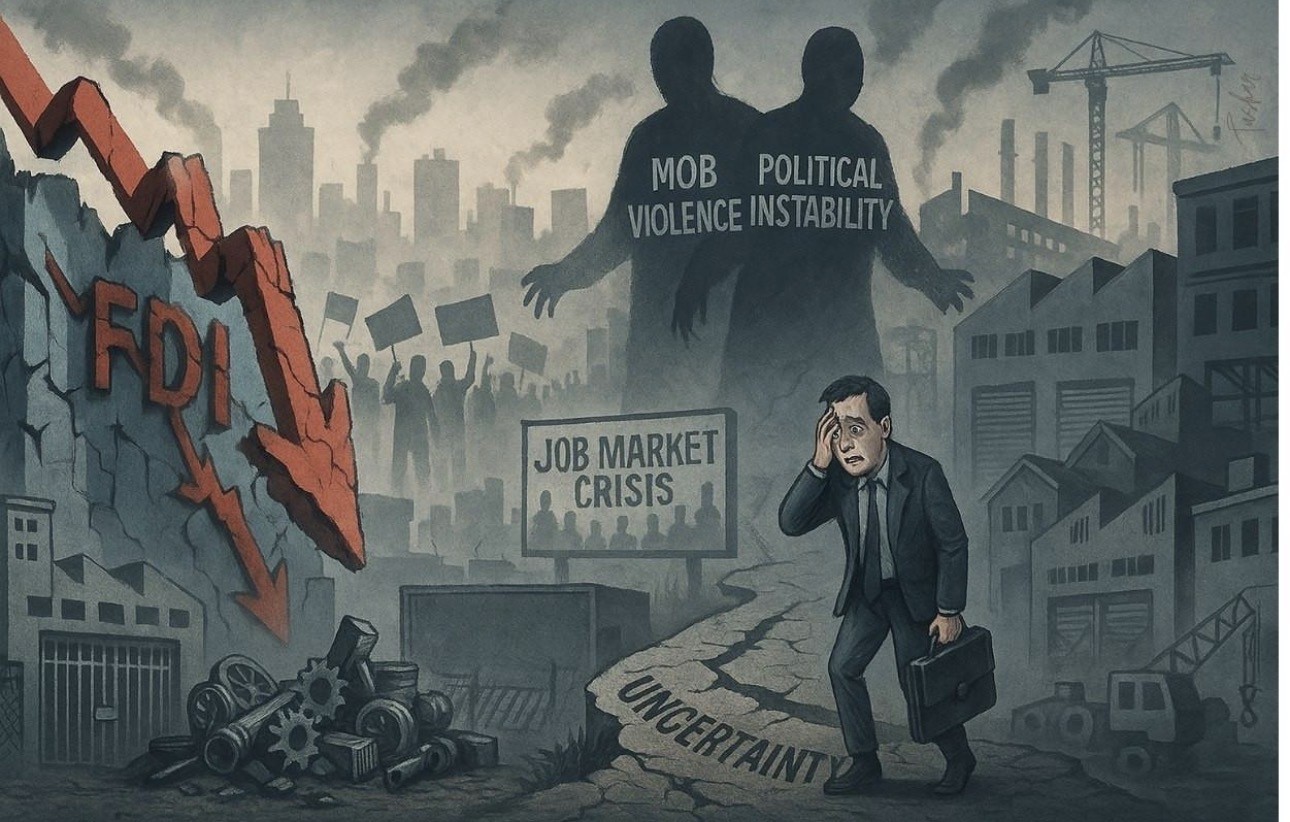
When prices rise, jobs become uncertain, and families struggle to keep up. Over time, economic anxiety can become political anger, and political anger can reshape what voters are willing to accept from their leaders.
The economy affects almost every part of our lives, from employment and housing to our ability to buy groceries and provide for our families. But economic instability can also influence how people view government, political leaders, and democratic institutions.
That raises an important question: Can the boom-bust cycle create conditions that make authoritarian leadership more appealing?
Economic instability does not cause authoritarianism by itself. But when financial insecurity weakens trust in institutions, it can make promises of strong, decisive leadership more attractive, especially if democratic safeguards are already under pressure.
Understanding the Boom-Bust Cycle
The boom-bust cycle, commonly discussed as part of the business cycle, describes periods of economic expansion and contraction.
During an expansion, businesses grow, employment opportunities can increase, consumer spending rises, and people may become more optimistic about their financial futures. Greater consumer demand can encourage businesses to invest and hire more workers.
Economic expansion, however, does not continue indefinitely.
During a downturn, businesses may reduce hiring, cut production, or lay off employees. In fact, consumers may spend less because of declining income, unemployment, or uncertainty about the future. For households without substantial savings or other financial resources, an economic downturn can be especially difficult.
Even after economic growth returns, the financial and psychological effects of economic insecurity may continue influencing how people think about their government.
When Economic Frustration Becomes Political Frustration
Economic conditions can shape how people view political leaders and institutions. When people feel secure, they may have greater confidence in the existing system. When they experience economic insecurity, that confidence can decline.
Andrew Wroe’s research on economic insecurity and political trust in the United States found that people who perceived themselves and their families as economically insecure showed lower levels of political trust.
Political scientist Yotam Margalit has similarly reviewed evidence showing that economic shocks, such as job loss and sharp income declines, can affect political attitudes.
His research review found that negative economic shocks can reduce trust in political institutions, although their effects on actual voting behavior are more complicated.
Economic hardship, therefore, can affect a person’s bank account more than a person’s bank account. It can affect their relationship with the political system itself.
Economic Frustration and the Demand for Change
When political leaders promise economic improvements and voters believe those promises have not been fulfilled, frustration can turn into demands for change. Some people vote against the party in power, others demonstrate, boycott, organize, or participate in civic life in other ways.
The 2024 presidential election offers one example. Inflation and the cost of necessities were major concerns for many Americans, and Donald Trump campaigned on promises to lower prices and improve economic conditions.
Voters supported him for many reasons, but the election illustrates how economic dissatisfaction can become part of a broader demand for political change. Economic dissatisfaction is not the same as an official recession. People can feel financially insecure because of high prices, housing costs, employment concerns, or other pressures even while the broader economy is expanding. The political consequences of insecurity therefore extend beyond officially defined downturns.
When Political Disappointment Leads to Disengagement
Repeated political disappointment can produce another consequence: disengagement. When voters support politicians who promise change but believe their circumstances have not improved, some may begin questioning whether political participation makes a difference.
For some people, disappointment can lead to withdrawal from politics. For others, frustration produces the opposite response, motivating them to vote, organize, protest, or become more politically active.
This distinction matters.
Economic frustration does not produce one predictable political response. The same economic pressures can lead different people toward different political choices.
Why Strong Leadership Can Become Appealing
Periods of uncertainty can also affect the qualities some voters look for in political leaders. A politician who promises to lower prices, create jobs, restore stability, or dramatically change the existing system may appeal to people who believe traditional political institutions have failed them.
Under those circumstances, a leader who appears confident and decisive may become especially attractive. Research provides evidence of a possible connection between economic disruption and authoritarian attitudes. Cameron Ballard-Rosa, Mashail Malik, Stephanie Rickard, and Kenneth Scheve studied communities in the United Kingdom affected by trade shocks and found an association between greater exposure to those economic disruptions and stronger authoritarian values.
That does not mean people experiencing financial hardship automatically become authoritarian.
Nor does supporting a strong political leader necessarily mean supporting authoritarian government. Strong democratic leadership can work entirely within constitutional restraints. The concern begins when solving economic or political problems is presented as requiring fewer institutional restraints, weaker opposition, or greater concentration of power in the executive.
When the Desire for Stability Challenges Democratic Safeguards
Someone struggling economically may become more willing to tolerate expanded government authority if they believe temporary sacrifices are necessary for conditions to improve.
They may believe things have to get worse before they get better, particularly when political leaders promise that economic relief is coming. But what happens when those better days never arrive?
Frustration can increase, and citizens may begin demanding change. If democratic safeguards have already been weakened, however, holding political leaders accountable can become more difficult. Courts, legislatures, elections, a free press, and civil society all provide mechanisms for challenging government power.
This is why the gradual weakening of democratic safeguards matters. The danger is not simply that political leaders get additional authority during a crisis. The greater concern is whether expanded authority becomes entrenched while institutions capable of checking that power become weaker.
How Democratic Erosion Happens
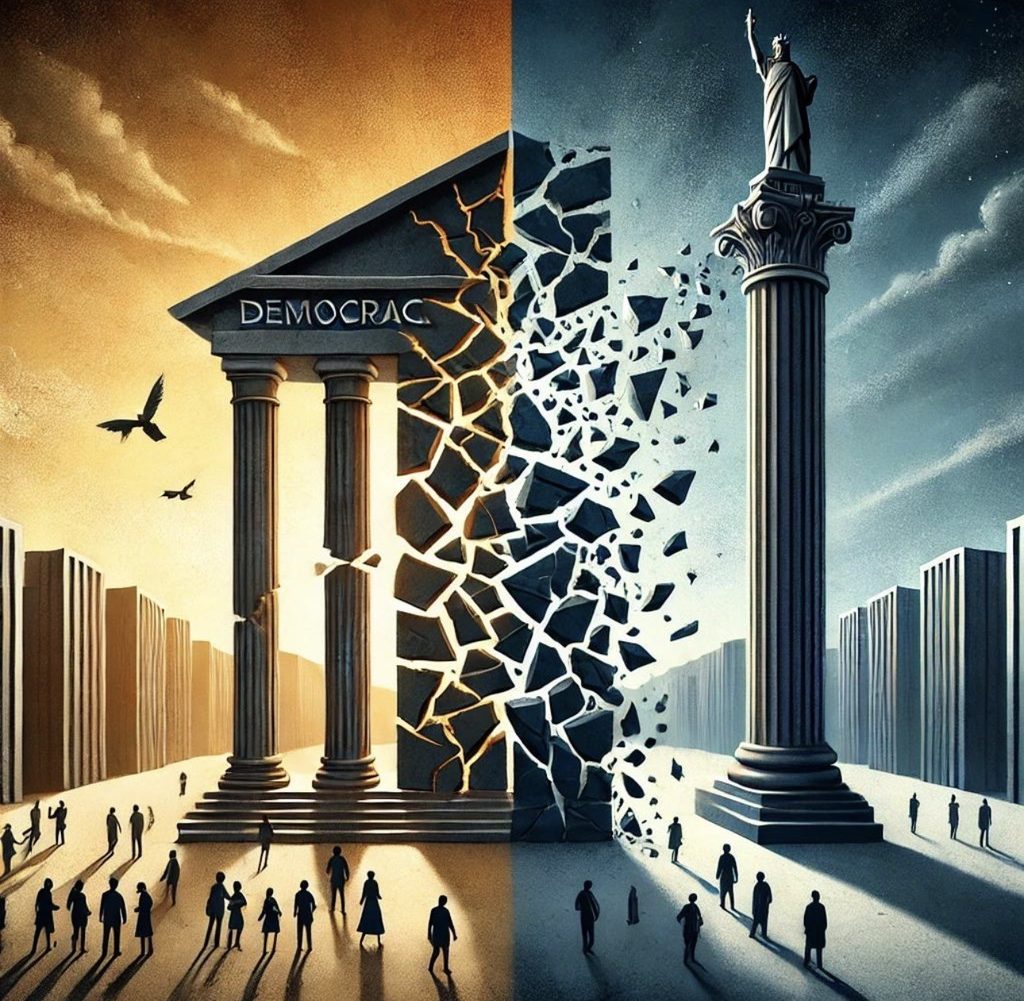
Democratic erosion does not necessarily happen overnight. A country can continue holding elections while other democratic safeguards gradually deteriorate. Warning signs can include weakening checks and balances, restrictions on independent journalism, interference with genuinely competitive elections, pressure on independent institutions, and limits on citizens’ ability to criticize or organize against their government.
A free press, competitive elections, independent courts and legislatures, freedom of expression, peaceful protest, and civil society all help citizens challenge government power and hold leaders accountable.
No single disagreement over government policy proves that a country has become authoritarian. The larger concern is a sustained pattern in which multiple safeguards weaken, and political leaders become progressively more difficult to hold accountable.
The United States and Democratic Erosion
These warning signs raise an important question for the United States: Do actions by the current administration resemble any patterns associated with democratic erosion? The answer requires examining specific actions rather than beginning with a political label.
In September 2026, the Trump administration barred journalists from CNN, MS NOW, and Politico from White House access. The administration defended the decision, while the news organizations challenged it in court. A federal judge concluded that the organizations were likely to succeed on their constitutional claims, and their access was restored.
The incident illustrates both sides of the institutional question: restrictions on news organizations can raise concerns about retaliation against the press, while the successful court challenge shows that an important check on executive authority continued to function. Voting and election administration provide another area of debate. The Trump administration has pursued efforts involving voter eligibility and access to state voter data, arguing that these measures are intended to protect election integrity.
Critics have raised concerns about privacy and the possibility of eligible voters being disenfranchised. Several administration efforts have encountered legal setbacks. These disputes do not by themselves answer whether the United States is experiencing democratic erosion. They provide evidence that should be evaluated against the democratic safeguards discussed above including competitive elections, civil liberties, press freedom, judicial independence, and meaningful limits on executive power.
Where Project 2025 Fits into the Discussion
Project 2025 matters in this discussion not because its existence proves authoritarianism, but because it raises broader questions about how much power should be concentrated in the presidency.
The Heritage Foundation organized Project 2025 with a coalition of conservative organizations to prepare policies, personnel, training, and an implementation strategy for future conservative administration. Its Mandate for Leadership proposed extensive changes throughout the federal government.
Supporters described the project as a way to make the executive branch more responsive to an elected president and to reduce the influence of what they viewed as an unaccountable federal bureaucracy.
Critics have argued that some proposals could concentrate substantially more authority in the presidency and weaken the independence of parts of the federal government. The existence of Project 2025 does not itself prove that the United States has become authoritarian, nor does the appearance of a policy in the document automatically make that policy anti-democratic.
The more useful question is whether specific government actions weaken the safeguards necessary for democratic accountability.
Connecting the Boom-Bust Cycle to Authoritarianism
The boom-bust cycle does not automatically transform a democracy into an authoritarian government. The relationship is indirect.
Economic instability can produce financial insecurity. Financial insecurity can contribute to political frustration.
Political frustration can reduce trust in institutions. Declining trust can increase demands for dramatic political change.
Under certain conditions, that environment may also make strong-leader appeals more attractive. The possible pathway looks something like this:
- Economic instability
- Economic insecurity
- Political frustration
- Declining political trust
- Demand for dramatic change
- Greater receptiveness to strong-leader appeals
- Potential pressure on democratic safeguards
But none of those steps automatically produce the next.
Economic frustration can motivate citizens to defend democratic institutions rather than abandon them. Political leaders can exercise strong leadership while respecting constitutional limits. Courts, legislatures, voters, journalists, state governments, and civil society can continue checking executive authority even when those institutions are under political pressure.
Conclusion
In sum, the boom-bust cycle can shape how people view political leaders and government, but it does not decide political outcomes on its own.
During periods of hardship or insecurity, financial pressure can contribute to frustration, dissatisfaction, and declining confidence in political leadership. In that environment, some voters may become more receptive to candidates who present themselves as strong, decisive, and willing to make major changes.
But economic frustration does not automatically lead to authoritarianism. The greater danger arises when economic insecurity is combined with declining political trust and a willingness to tolerate weakened democratic safeguards in exchange for promises of stability or rapid change. Therefore, the boom-bust cycle alone does not create authoritarianism.
Instead, economic instability can contribute to political conditions in which authoritarian appeals become more attractive to some citizens. Understanding that distinction matters.
Economic hardship can test a democracy, but the real measure of democratic strength is whether citizens and institutions respond to crisis by demanding accountability rather than surrendering it.
Sources
Ballard-Rosa, C., Malik, M. A., Rickard, S. J., & Scheve, K. (2021). The economic origins of authoritarian values: Evidence from local trade shocks in the United Kingdom. Comparative Political Studies, 54(13), 2321-2353.
Margalit, Y. (2019). Political responses to economic shocks. Annual Review of Political Science, 22, 277-295.
Pew Research Center. (2026, July 23). As the 2026 midterms approach, economy is front and center.
Reuters. (2026, September 24). White House reinstates access to CNN, MS NOW, and Politico following judge’s order.
Reuters. (2026, September 25). Trump continues voter data push despite repeated setbacks.
The Heritage Foundation. (2023). Mandate for Leadership: The Conservative Promise.
Wroe, A. (2016). Economic insecurity and political trust in the United States. American Politics Research, 44(1), 131-163.