
Is the American Economy Stagnating?
By PVAL News | September 24, 2026

The American economy is not stagnant in the strict sense: output and productivity continue to grow. But those national gains do not necessarily translate into financial progress for ordinary households. To understand that disconnect, we must examine economic growth alongside wages, employment, productivity, inflation, consumer spending, wealth distribution, and the cost of living.
That distinction leads to the central question of this article: If the economy is expanding, why do so many Americans still feel as though they are falling behind?
So, how do we figure out whether America is experiencing economic stagnation? We have to look at the evidence and understand what the numbers are telling us.
Economic Growth
First, to understand stagnation, we need to look at how it affects economic growth. Economic growth is one of the first areas we should examine because it can give us an idea of whether the economy is expanding, slowing down, or remaining relatively unchanged. But economic growth is only one piece of the puzzle.
If the economy is growing, does that automatically mean the country is moving forward? And if the economy is growing slowly, does that automatically mean we are experiencing stagnation?
I think these are important questions because the answer may not be as simple as looking at one economic number. We have to look at the bigger picture and understand what that growth actually means for the people living and working in America.
The word stagnation can be defined differently among economists. But when it is all said and done, economic stagnation can mean slow economic growth, weak productivity growth, limited investment, or an economy that struggles to create meaningful improvements in living standards. One important factor we have to look at is productivity. According to the U.S. Bureau of Labor Statistics, labor productivity in the non-farm business sector increased 1.4 percent in the second quarter of 2026, while productivity increased 2.2 percent compared with the same quarter a year earlier. (Bureau of Labor Statistics 7)
At first glance, those numbers may not appear to show stagnation. And this is where the conversation becomes more complicated. If productivity is increasing, can we really say that the American economy is stagnating? I believe this is why we cannot look at just one economic indicator. We have to look at several different factors and ask a bigger question: Is the economy growing in a way that is actually improving the lives of everyday Americans?
The data does not support the claim that the American economy has stopped growing. It does, however, raise a different question: Is that growth strong and broadly shared enough to improve Americans’ financial well-being? Productivity helps answer the first part of that question, while wages, prices, and household finances help answer the second.
According to the U.S. Bureau of Labor Statistics, labor productivity in the non-farm business sector increased 1.4 percent in the second quarter of 2026. BLS also reported that productivity was 2.2 percent higher than it was during the same quarter a year earlier. (Bureau of Labor Statistics)
These numbers show that productivity is still growing, but they also raise another important question: Is productivity growth translating into better living standards for everyday Americans? To answer it, we must look beyond output and examine what growth means for people who are working, paying bills, raising families, and trying to build a more secure future.
Productivity data establishes that the economy is still expanding, but it cannot show whether households are becoming more financially secure. Wages and living costs provide the next part of that picture.
For example, the U.S. Bureau of Labor Statistics provides data that can help us understand what is happening with productivity in the American economy.
Productivity is still increasing, which means the American economy has not stopped producing more with the workers and resources it has. The more important question is whether those gains are translating into higher purchasing power and better living standards for everyday Americans.
Because productivity is not just about how much an economy can produce. It can also make us think about wages, the cost of living, and whether workers are able to experience improvements in their standard of living. So, while the numbers may show that productivity is growing, we still have to ask what that growth means for the people behind those numbers.
Wages and the Cost of Living
If productivity is increasing, wages are the next factor to examine. Economic growth means little to an individual worker when a larger paycheck still does not keep pace with housing, food, transportation, healthcare, and other necessities. A person can have a job, receive a raise, and nevertheless fall behind, which is why the relationship between wages and living costs is central to the question of stagnation.
The economy may be growing, businesses may be producing more, and workers may be becoming more productive. But if people’s everyday expenses are increasing faster than their ability to afford them, can we really say that everyone is experiencing meaningful economic progress?
That doesn’t necessarily mean the economy is stagnant. It means we have to look at what economic growth feels like for the people living through it. And that brings us to another important question: Are Americans earning enough to keep up with the cost of living?
Are Incomes Keeping Up with the Cost of Living?
Are incomes keeping up with the cost of living? This is a very important question that deserves an answer. According to recent data from the U.S. Bureau of Labor Statistics, average hourly earnings for private-sector workers increased by 3.1 percent from August 2025 to August 2026. However, prices, as measured by the Consumer Price Index, increased by 3.4 percent over the same period. (Bureau of Labor Statistics)
That difference may seem small, but it can make a difference for money people actually have available to spend. BLS reported that real average hourly earnings, which account for the effects of inflation, decreased by 0.3 percent over the year. (Bureau of Labor Statistics)
So, what does this tell us?
These figures suggest that headline growth can coexist with financial strain. People may earn more in nominal terms while losing purchasing power when prices rise faster than wages. The relevant measure of progress, therefore, is not simply whether incomes increase, but whether those incomes buy more and leave households with greater financial security.
This is a question that has been on my mind for a while. We hear that the economy is growing, people are earning more money, and productivity is increasing. But when we look at our everyday lives, many of us may still wonder why it feels so difficult to get ahead.
Maybe the answer is not as simple as saying that America is either growing or stagnating. Maybe we have to look at what that growth actually means for the people who are living through it. And that is what makes this conversation about stagnation so important.
Inflation and Purchasing Power
So, what exactly is inflation, and what does it have to do with purchasing power? Inflation is the increase in the prices of goods and services over time. When prices go up, the money we have may not be able to buy as much as it did before.
That is where purchasing power comes into the conversation. Purchasing power is basically how much we can actually buy with the money we earn. For example, if someone receives a raise but the prices of the things they need increase even faster, that raise may not feel like much of a raise at all. They may be earning more money, but their money is not going as far.
This is why inflation matters when we talk about wages and the cost of living. It is not enough to simply ask whether people’s incomes are increasing. We also have to ask whether those increases are keeping up with rising prices. And that brings us back to the bigger question: If Americans are making more money but their money is buying less, are they really moving forward?
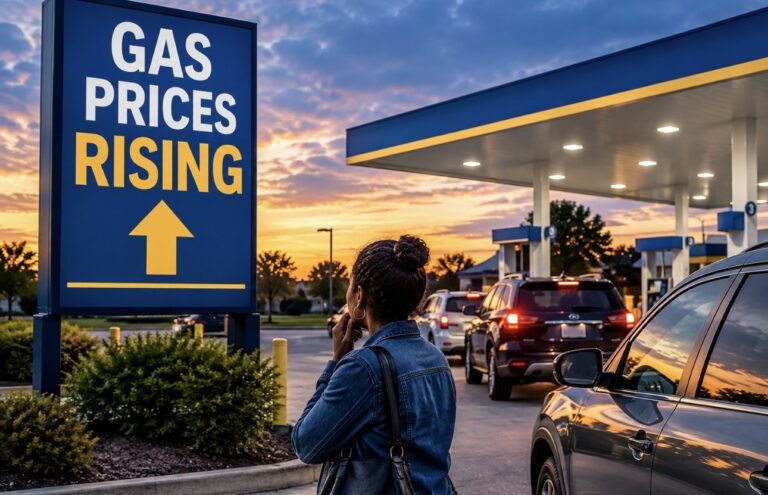
As prices increase, it is getting harder for some people to afford groceries, rent, gas, clothing, and other basic necessities. When the cost of everyday life continues to rise, people may have to make difficult choices about what they can afford and what they have to go without.
Over the past year, tariffs implemented by the Trump administration have also become part of the conversation about rising prices. According to research from the Federal Reserve, tariffs implemented in 2025 contributed to higher prices for some consumer goods. The Federal Reserve found that the effects were particularly noticeable in goods that were more exposed to tariffs. (Federal Reserve)
But tariffs are not the only factor affecting prices. Energy costs, food prices, housing, supply conditions, and other economic factors can also affect what consumers pay. (Federal Reserve) So, when we look at the cost of everyday life, we have to ask another important question: How much more are Americans paying, and are their incomes increasing enough to keep up?
As prices of everyday essentials rise, it can become harder for people to pay their rent and credit card bills on time or even afford the groceries they need. The data gives us a better idea of what some households are experiencing.
According to the Federal Reserve’s 2025 Survey of Household Economics and Decision-making, 23 percent of renters reported that they had been behind on their rent at some point during the previous year. The survey also found that credit card balances had increased substantially among people who reported that they were having difficulty getting by. (Federal Reserve 1)
The New York Federal Reserve reported that credit card balances reached $1.263 trillion in the second quarter of 2026. At the same time, 4.7 percent of outstanding household debt was in some stage of delinquency. (Federal Reserve Bank of New York)
We also have to consider the prices people are paying for everyday necessities. The Bureau of Labor Statistics reported that prices increased 3.4 percent overall from August 2025 to August 2026. Food prices increased 2.7 percent, while shelter increased 3.0 percent during the same period. (Bureau of Labor Statistics)
These numbers don’t tell us that every American is struggling financially. But they do show that some households are facing financial pressure while the cost of everyday necessities continues to rise. So, once again, we have to ask: If people are working, earning incomes, and the economy is growing, why are some households still having difficulty keeping up with the basic costs of living?
Are Americans Really Getting Ahead?
If a person is working but cannot afford an unexpected $500 or $1,000 expense without going into debt, are they really getting ahead? This is another question that has been on my mind. We often hear about economic growth and how the economy is moving forward, but what does moving forward actually mean for the average person?
According to the Federal Reserve’s 2025 Survey of Household Economics and Decision-making, 16 percent of adults said they did not pay all of their bills in full during the previous month. The Federal Reserve also reported that 59 percent of adults had experienced at least one major unexpected expense during the previous year. (Federal Reserve 7)
At the same time, 63 percent of adults said they would be able to cover a hypothetical $400 emergency expense using cash or its equivalent. That means a majority could handle that particular expense, but it also means a significant number of people would have to rely on another option. (Federal Reserve)
So, are people really getting ahead?
I think that is where we have to look beyond economic growth and ask a bigger question: Who is actually benefiting from that growth, and how is that benefit being experienced by everyday Americans?
While many Americans struggle to stay afloat, the ultra-wealthy have continued to build and maintain their wealth. This raises another important question: If the economy is growing, why does that growth appear to feel so different depending on where a person stands financially?
Economic growth does not necessarily mean that every household experiences the same financial outcome. Some people may have difficulty keeping up with everyday expenses, while others have investments, assets, and other sources of wealth that can continue to grow.
So, when we talk about America moving forward, perhaps we should also ask: Are we all moving forward together, or is the distance between those who have the most and those who have the least becoming greater?
Who Is Benefiting from Economic Growth?
The Federal Reserve’s Distributional Financial Accounts show how unevenly wealth is held. In the second quarter of 2026, the top 1 percent of U.S. households held approximately $60.32 trillion in wealth, compared with approximately $4.28 trillion held by the bottom 50 percent—roughly a fourteenfold difference. These figures do not describe every household’s circumstance, but they do show that wealth in America is highly concentrated.
The top 1 percent held roughly 14 times as much wealth as the entire bottom half of American households. Now, I want to be clear about something. These numbers do not mean that every person in the bottom 50 percent is struggling financially, and they do not mean that every person in the top 1 percent has the same financial situation.
Wealth is also different from income. A person’s income tells us how much money they receive, while wealth includes things such as investments, businesses, homes, and other assets. But the numbers do show us something important: wealth in America is highly concentrated.
And this connects directly to the question we have been asking throughout this article.
We have already looked at economic growth, productivity, wages, inflation, purchasing power, and the rising cost of everyday life. We have seen that an economy can continue to grow while some people still struggle to keep up with their expenses. Now we can see another part of the picture.
Some households have more wealth and assets that can increase in value as the economy grows. Other households may depend primarily on their paychecks to cover housing, food, transportation, healthcare, debt, and other everyday expenses.
So, when the economy grows, the experience of that growth can be very different depending on where a person starts financially. That brings me to another question: If America is moving forward, who is moving forward with it?
And perhaps an even bigger question is: Can we really say that everyone is progressing when the benefits of economic growth are not being experienced equally?
Does Economic Growth Mean Americans Are Progressing?
I don’t believe economic growth by itself tells us whether Americans are actually progressing. An economy can grow while the benefits of that growth are distributed very differently across the population. If a large share of the wealth created by that growth is concentrated among people who already own significant amounts of businesses, stocks, real estate, and other assets, then the overall economy can look stronger without every household experiencing the same financial improvement. That is why I think we have to look beyond economic growth.
The Federal Reserve’s wealth data gives us another part of the picture. In the second quarter of 2026, the top 1 percent of U.S. households held approximately $60.32 trillion in wealth, while the bottom 50 percent held approximately $4.28 trillion. So, while the economy may continue to grow, we also have to ask who owns the assets that are growing in value?
This does not mean that economic growth has no importance. Economic growth can create jobs, increase production, encourage investment, and generate income. But growth alone does not tell us whether people’s wages are keeping up with inflation, whether families can afford housing and groceries, whether workers are building wealth, or whether people have enough financial security to handle unexpected expenses.
Those are different questions. And maybe this is where the conversation about stagnation becomes even more complicated. Could America be experiencing economic growth while some Americans are still experiencing financial stagnation?
If that is possible, then perhaps the real question isn’t simply whether America is moving forward. The question is whether Americans are able to move forward with it.
Growth Versus Financial Reality
Yes, America can be experiencing economic growth while many Americans are still struggling to stay afloat. The reason is that economic growth does not necessarily tell us how that growth is being experienced across different levels of society. The economy can grow, businesses can become more valuable, and household wealth can increase while many families are still struggling with the cost of housing, groceries, transportation, healthcare, and debt.
The wealth data we looked at helps put this into perspective. In the second quarter of 2026, the top 1 percent of U.S. households held approximately $60.32 trillion in wealth, compared with approximately $4.28 trillion held by the bottom 50 percent.
That doesn’t mean that all economic growth is going to the wealthy. It does show, however, that wealth is highly concentrated, and that people who already own substantial assets can experience economic growth very differently from people who depend primarily on their wages to cover their everyday expenses.
So, when we hear that the American economy is growing, I think we should ask another question: What does that growth actually look like for the average American?
Because if the economy is growing, but millions of people are still struggling to afford the basic necessities of life, then economic growth alone may not be enough to tell us whether Americans are truly progressing. Maybe the bigger issue isn’t whether America is growing. Maybe the question is whether that growth is reaching the people who need it most.
What Does Progress Mean for the Average American?
So, what does progress actually mean for the ordinary American? I believe progress means being able to pay your rent or mortgage, put food on the table, keep up with your bills, and still have enough money left over to put toward savings.
Progress should mean more than simply having a job or earning a paycheck. It should mean having some financial breathing room after taking care of the necessities of everyday life.
If someone works full-time but their entire paycheck goes toward rent, groceries, transportation, utilities, healthcare, and debt, can we really say that person is financially progressing?
Maybe they are surviving. Maybe they are keeping up. But is keeping up the same thing as getting ahead? This is where I believe we have to look beyond economic growth.
A growing economy can tell us that economic activity is increasing, but it doesn’t necessarily tell us whether an ordinary family has enough money left over after paying its bills to build an emergency fund, save for a home, invest for retirement, or prepare for the future. And that matters because financial security is part of what many people would consider progress.
If Americans are working, earning money, and contributing to a growing economy, shouldn’t they also have a reasonable opportunity to build a better financial future for themselves and their families? That is the question we have to consider when we talk about whether America is truly moving forward.
So, Are We Really Progressing?
After looking at economic growth, productivity, wages, inflation, purchasing power, the cost of everyday necessities, household financial pressure, and the distribution of wealth, I don’t think the question of whether America is progressing has a simple answer.
The data shows that the American economy can continue to grow while many Americans still struggle to keep up with the basic costs of everyday life. For me, that raises an important distinction. Economic growth and financial progress are not necessarily the same thing.
A country can produce more, businesses can grow, and total wealth can increase. But for the ordinary American, progress may look much simpler: being able to pay the bills, put food on the table, keep a roof over their head, handle an unexpected expense, and still have enough left over to save for the future.
The American economy may be growing, but growth alone is not proof of shared progress. If higher output and greater wealth do not translate into stronger purchasing power, financial security, and opportunity for a broad share of the population. Then the numbers tell only part of the story. The question is not simply whether America is moving forward, but how many Americans are able to move forward with it.
Because if economic growth does not translate into greater financial security for a large portion of the population, then we have to take a closer look at what is happening beneath the numbers.
Is America truly progressing, or are some Americans simply working harder to stay in the same place? Maybe that is the conversation we need to have next.
Sources
• Federal Reserve Board — Distributional Financial Accounts: U.S. household wealth by wealth percentile, including the 2026 Q2 figures we used to discuss the distribution of wealth. https://www.federalreserve.gov/releases/z1/dataviz/dfa/distribute/table/?utm_source
• U.S. Bureau of Labor Statistics — Real Earnings, August 2026: Data on wages after accounting for inflation. BLS reported that real average hourly earnings decreased 0.3% from August 2025 to August 2026. https://www.bls.gov/news.release/realer.nr0.htm?utm_source=
• U.S. Bureau of Labor Statistics — Consumer Price Index, August 2026: Data on changes in consumer prices, including food, shelter, energy, and overall inflation. https://www.bls.gov/news.release/archives/cpi_09112026.htm?utm_source=chatgpt.com
• Federal Reserve Board — Survey of Household Economics and Decision making: Research on household financial well-being, expenses, savings, debt, housing, and economic hardships.https://www.federalreserve.gov/publications/shed.htm?utm_source=
• Federal Reserve “Paying More and Buying Less: 2025 Tariffs and U.S. Household Spending”: Research examining the relationship between 2025 tariffs, consumer prices, and household spending. https://www.federalreserve.gov/econres/feds/paying-more-and-buying-less-2025-tariffs-and-us-household-spending.htm?utm_source=