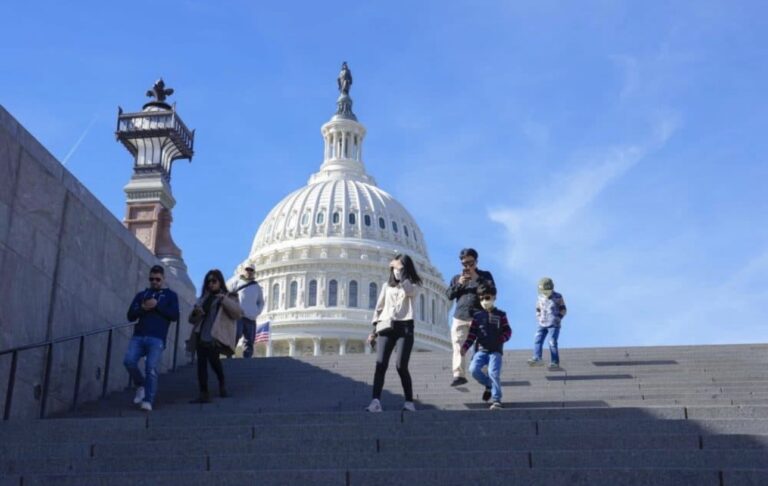
Federal Appeals Court Questions Trump’s National Guard Deployment in Washington, D.C.
By PVAL News | October 15, 2026
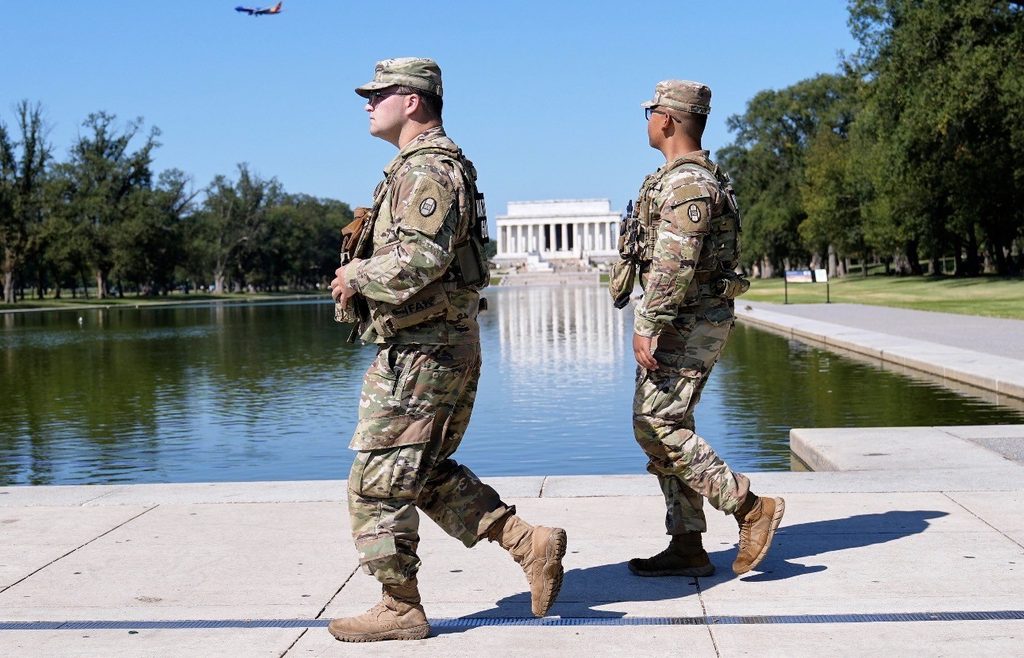
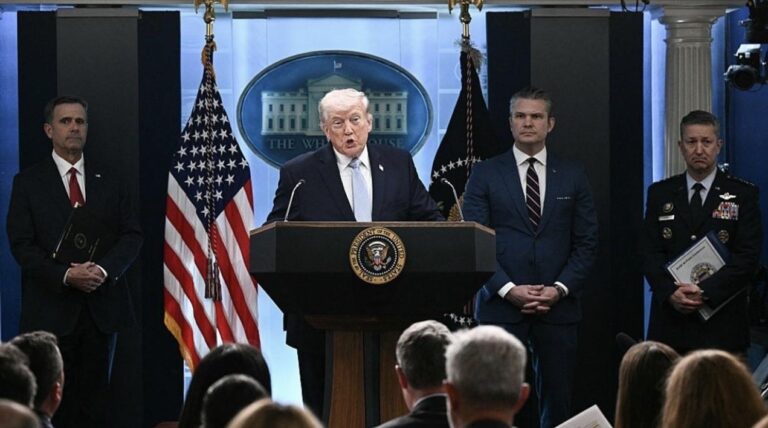
A federal appeals court is considering whether President Donald Trump exceeded his legal authority by deploying National Guard troops throughout Washington, D.C. a dispute that could help define the limits of presidential power in the nation’s capital.
On October 14, 2026, a three-judge panel of the U.S. Court of Appeals for the District of Columbia Circuit heard arguments over the deployment, which began in August 2025 as part of the administration’s stated effort to address crime and public safety. The judges pressed government attorneys on whether there are meaningful limits to the president’s authority to mobilize National Guard troops for domestic law enforcement support in Washington, D.C.
At the center of the case is a consequential question: How far may a president go in using military personnel to support domestic law enforcement?
Why Did President Trump Deploy the National Guard?
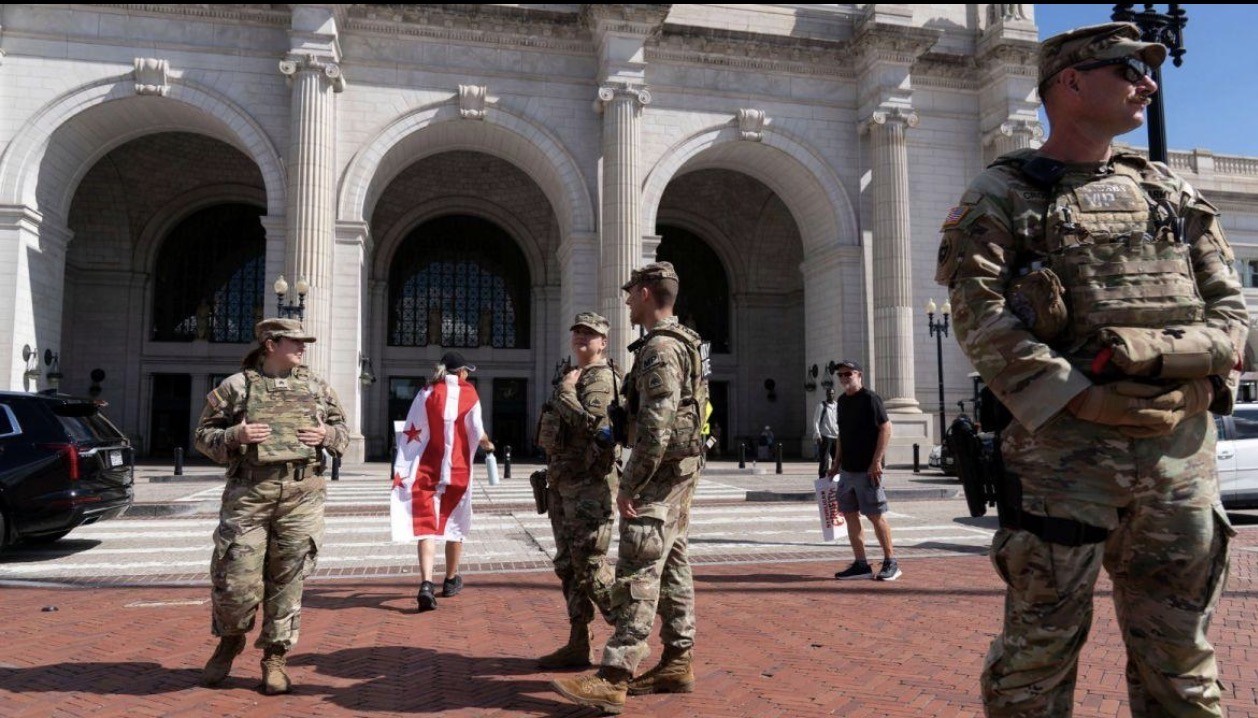
In August 2025, President Trump ordered National Guard troops into Washington, D.C., as part of an initiative the administration described as a response to crime and public safety concerns.
The administration said deployment was needed to support law enforcement, protect federal property, and maintain order. The force eventually peaked at about 5,000 troops and supported arrest operations, street patrols, and cleanup efforts before its size declined.
The administration argues that the military presence has contributed to lower crime. District officials dispute that justification and say the deployment improperly interferes with local authority, prompting a federal lawsuit.
What Did the Lower Court Decide?
In November 2025, U.S. District Judge Jia Cobb ruled that the deployment was unlawful, concluding that the president could not unilaterally use the D.C. National Guard or troops from other states for general crime control in the District.
The court recognized that the federal government has legitimate authority to protect federal facilities and operations but concluded that this authority did not amount to unlimited power to use troops for general crime control throughout the city.
The administration appealed. In December 2025, the D.C. Circuit stayed the lower court’s order while the appeal proceeded, allowing the deployment to continue.
What Happened During the October 14 Hearing?
During the October 14 hearing, the panel repeatedly asked whether the administration’s position had a meaningful limiting principle and how it fit with restrictions on military participation in civilian law enforcement.
Government attorney Eric McArthur argued that the president may call out the D.C. National Guard “in aid of the civil authorities,” emphasizing the District’s distinct constitutional status and the president’s authority over its Guard.
Attorney Mitchell Reich, representing the district, argued that the deployment exceeded lawful federal authority because it used military personnel for routine crime control rather than responding to circumstances such as an invasion, insurrection, riot, or organized violence.
The judges’ questions showed scrutiny of both sides. But questions during oral argument do not guarantee how the court will rule, and as of October 14, the appeals court had not issued a final decision.
What Is the Posse Comitatus Act?
A central issue is the Posse Comitatus Act, codified at 18 U.S.C. § 1385. The law generally bars the use of specified federal armed forces to execute civilian laws unless the Constitution or Congress expressly authorizes it.
The statute reflects a longstanding distinction between civilian law enforcement and military operations. Its application here depends on the Guard members’ legal status, command structure, and mission.
The question is especially complicated in Washington because the D.C. National Guard does not operate under a governor in the same way as most state Guard units. The court must therefore consider both the district’s unique status and the legal limits on military involvement in civilian policing.
Why Is Washington, D.C., Different from Other States?
Washington, D.C., is not a state. Article I, Section 8, Clause 17 of the Constitution gives Congress legislative authority over the federal district. The Home Rule Act of 1973, however, established an elected mayor and council and delegated authority over many local affairs while preserving Congress’s ultimate authority.
The Arguments on Both Sides
The Trump administration argues that the president has broad authority to protect the nation’s capital, support civil authorities, and ensure that federal operations continue safely. Supporters of the deployment say National Guard personnel can provide needed assistance to law enforcement and help address public safety concerns.
Opponents argue that deployment represents an excessive expansion of presidential power and improperly turns military personnel into a sustained presence in local policing. D.C. officials contend that routine crime control should remain primarily the responsibility of civilian law enforcement agencies.
They also question whether a prolonged military presence undermines the authority granted to the District under the Home Rule Act.
At its core, the dispute is about how to balance federal responsibility for the capital with local self-government and the traditional separation between military power and civilian law enforcement.
Why This Case Matters Beyond Washington, D.C.
Although the lawsuit concerns the nation’s capital, its reasoning could influence future disputes over domestic military deployments and presidential authority.
Presidential authority is a central feature of the American constitutional system, but it runs alongside laws enacted by Congress and judicial review.
The case raises several important questions:
- Under what circumstances may a president deploy National Guard troops for domestic operations?
- What legal restrictions apply when military personnel assist civilian law enforcement?
- How much authority does Washington, D.C.’s elected government retain over local public safety?
- What role should federal courts play in reviewing presidential military decisions?
The answers could help clarify the boundaries of executive power in future disputes.
What Happens Next?
The appeals court will now consider the parties’ arguments before issuing a decision. It could affirm the lower court, reverse it, or adopt a narrower ruling addressing only parts of the deployment.
Further litigation, including a possible request for Supreme Court review, may follow. Unless the appeals court changes the existing order, the deployment may continue while the case remains pending.
Conclusion: Presidential Authority and the Rule of Law
The dispute presents a fundamental constitutional question: how far presidential power extends when domestic public safety, federal responsibility, and local self-government collide.
The president has significant responsibilities involving national security, federal operations, and public safety. But those responsibilities exist within a legal system that also imposes limits, requires statutory authority, and allows courts to review executive action.
The issue is not whether the National Guard may ever assist with public safety. It is whether this deployment was authorized by law and remained within constitutional and statutory boundaries.
As the appeals court considers the case, its decision could clarify the relationship between presidential authority, civilian law enforcement, and local governance in the nation’s capital.
Whatever the outcome, the case underscores a basic principle of democratic government: public officials must pursue their goals through lawful and accountable means.
Sources
- Associated Press, “Appeals Court Judges Question the Government About Trump’s D.C. National Guard Deployment,” October 14, 2026
- UPI, “Appeals Court Hears Arguments in National Guard Deployment to D.C.,” October 14, 2026
- Congressional Research Service, “Governing the District of Columbia: Overview and Timeline”
- District of Columbia Home Rule Act, Pub. L. 93-198
- Legal Information Institute, 18 U.S.C. § 1385