Political History | PVAL News
A Law That Changed the Course of American History
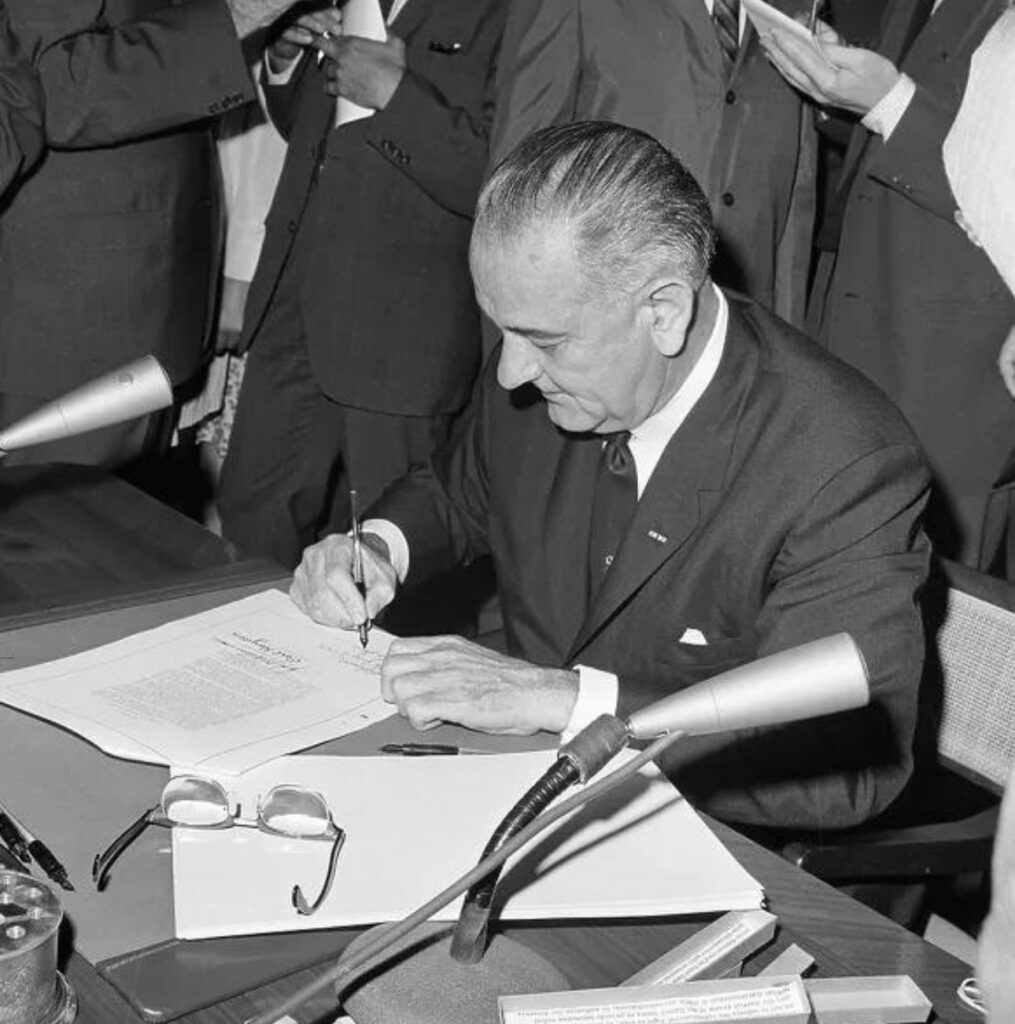
On July 2, 1964, President Lyndon B. Johnson signed the Civil Rights Act of 1964 into law. The legislation became one of the most important civil rights laws in American history, challenging racial discrimination and changing the relationship between the federal government and individual rights.
But the Civil Rights Act did not appear overnight. It was the result of decades of activism, court battles, protests, political negotiations, and the determination of Americans who demanded that the promises of equality found in the nation’s founding documents apply to everyone. The Library of Congress describes the law as the most significant piece of civil rights legislation since Reconstruction. (The Library of Congress »)
America Before the Civil Rights Act
For much of American history, racial discrimination was built into laws and institutions, particularly in the South. Following Reconstruction, Southern states established Jim Crow laws that enforced racial segregation. Black Americans could face discrimination in schools, restaurants, hotels, transportation, public facilities, employment, and other areas of everyday life.
The struggle against segregation intensified during the twentieth century. In 1954, the Supreme Court issued its landmark decision in Brown v. Board of Education, ruling that racial segregation in public schools was unconstitutional. Yet the decision did not at once end segregation. Resistance continued in many parts of the country. (The Library of Congress”)
The Montgomery Bus Boycott, the Freedom Rides, lunch-counter sit-ins, voter-registration campaigns, and other demonstrations brought increasing national attention to racial inequality. Then came Birmingham. Images of police using fire hoses and attack dogs against protesters-including children-shocked Americans and people around the world. The violence helped create political pressure for stronger federal civil rights legislation. (The Library of Congress”)
President Kennedy’s Proposal
Kennedy’s proposal faced significant opposition in Congress. Before the legislation could become law, however, Kennedy was assassinated on November 22, 1963. The responsibility for moving the legislation forward then fell to his successor, President Lyndon B. Johnson.
Lyndon B. Johnson and the Fight in Congress
Johnson understood Congress extremely well. Before becoming president, he had served for years in the House and Senate and had been Senate majority leader. After taking office, Johnson made passage of civil rights legislation a major priority.
He urged Congress to pass Kennedy’s bill and collaborated with congressional leaders from both parties to build support. The battle was not easy. The legislation faced strong opposition, including a lengthy Senate filibuster. Supporters eventually succeeded in breaking the filibuster through a cloture vote. The Senate passed the bill on June 19, 1964. The House then approved the Senate version, and President Johnson signed it into law on July 2, 1964. (The Library of Congress”)
What Did the Civil Rights Act Do?
The Civil Rights Act contained 11 titles, addressing discrimination in several areas of American life.
Among other provisions, the law:
- Prohibited discrimination in public accommodations.
- Addressed segregation in public facilities.
- Strengthened federal enforcement of school desegregation.
- Prohibited discrimination in federally funded programs.
- Prohibited employment discrimination.
- Created the Equal Employment Opportunity Commission to help enforce employment protections. (Congress.gov»)
The law addressed discrimination based on race, color, religion, national origin, and, in Title VII, sex. (Congress.gov) The significance of the law was enormous because it gave the federal government greater authority to challenge discriminatory practices that had remained entrenched for generations.
A Bipartisan Legislative Effort
The history of the Civil Rights Act is also an important reminder that major legislation can involve members of both political parties. Democratic President Lyndon Johnson championed the legislation, but Republicans in Congress also played important roles in helping it pass.
Senate Minority Leader Everett Dirksen, an Illinois Republican, was particularly important in securing Republican support for the bill.
The National Archives records the congressional process, including the Senate cloture motion and the final congressional votes that led to legislation becoming law. (National Archives ») This does not mean every politician agreed on civil rights. Quite the opposite: the legislation generated intense political conflict. But the final law demonstrated that congressional coalitions could form around legislation with enormous national consequences.
President Johnson Signs the Law
On July 2, 1964, Johnson signed the Civil Rights Act in the East Room of the White House. Among those present were Attorney General Robert Kennedy, Senator Hubert Humphrey, Senator Everett Dirksen, civil rights leader Martin Luther King Jr., and other congressional and civil rights leaders. (The Library of Congress”) Johnson described the legislation as part of America’s long struggle for freedom. The signing represented a major victory for the civil rights movement, but it was not the end of the struggle.
The Civil Rights Act Was Not the End
Passing a law does not automatically eliminate discrimination. The Library of Congress notes that the Civil Rights Act did not accomplish every goal of the civil rights movement. Continued grassroots activism, court decisions, and additional legislation were necessary. (The Library of Congress”)
One year later, Congress passed the Voting Rights Act of 1965, which directly addressed discriminatory barriers that prevented many African Americans from exercising their right to vote.
Together, the Civil Rights Act of 1964 and the Voting Rights Act of 1965 became two of the most important legislative achievements of modern civil rights era.
Why the Civil Rights Act Still Matters
The Civil Rights Act of 1964 is more than a historical event. It represents an important moment in the continuing American debate over equality, federal power, individual rights, and the meaning of citizenship. The law demonstrated that the federal government could use its authority to confront discrimination and protect civil rights.
It also showed that political change rarely happens through one person or one event. The Civil Rights Act was built upon decades of activism and legal challenges, followed by difficult negotiations inside Congress.
Its passage reminds us that democracy is not simply about elections. It is also about citizens organizing, lawmakers debating, courts interpreting the Constitution, presidents exercising leadership, and institutions responding to demands for change.
A Lesson from History
The Civil Rights Act of 1964 changed American law, but its history also teaches a broader lesson. Major political change often begins when ordinary people refuse to accept that injustice is simply the way things have always been.
The people who marched, protested, organized, registered voters, challenged segregation, brought lawsuits, and demanded action helped create the political pressure that eventually produced historic legislation. The Civil Rights Act did not solve every problem. But it changed the law and in doing so, it changed America.
Sources
Library of Congress – The Civil Rights Act of 1964: A Long Struggle for Freedom (The Library of Congress”)
National Archives — Civil Rights Act of 1964 (National Archives “)
National Archives – Congress and the Civil Rights Act of 1964 (National Archives 7)
Congress.gov – The Civil Rights Act of 1964 (Congress.gov»)
Library of Congress – Civil Rights Era, 1950-1963 (The Library of Congress”)