The “Great Switch”: How Democrats and Republicans Changed Over Time
By PVAL News
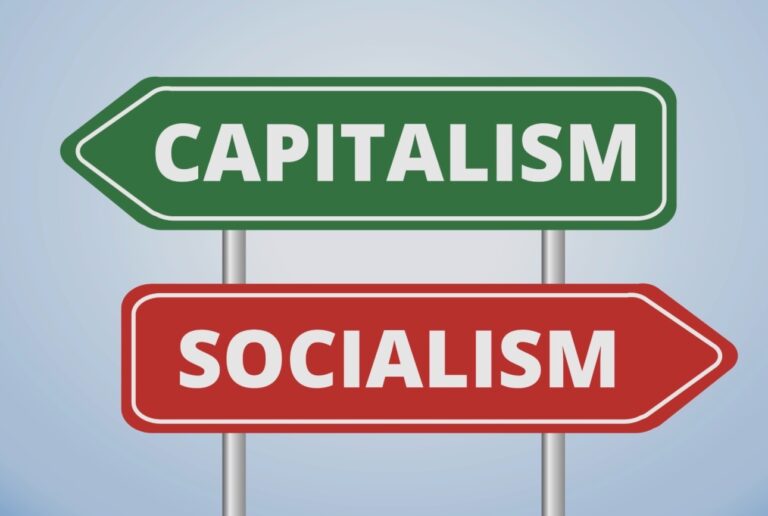
How did the Republican Party of Abraham Lincoln become associated with conservative politics, while the Democratic Party, once home to powerful Southern segregationists, became strongly associated with civil rights?
The answer involves a long transformation in American politics, often called the “Great Switch.”
That phrase can make the process sound simpler than it was. Democrats and Republicans did not exchange every belief in a single election. Their voters, regional strongholds, and policy priorities changed over generations. Understanding that history helps explain why a party’s name alone cannot tell us everything about its past.
Republicans, Democrats, and Slavery
The Republican Party emerged in 1854 in opposition to the expansion of slavery into western territories. Abraham Lincoln became its first successful presidential candidate in 1860.
The Democratic Party was divided between Northern and Southern factions, with Southern Democrats defending slavery. Those divisions helped fracture the party before the Civil War.
Applying today’s political labels directly to these nineteenth-century coalitions can therefore be misleading. (senate.gov, senate.gov)
After the Civil War, Republicans became strongly associated with emancipation and Reconstruction, helping establish strong Black loyalty to the party.
Meanwhile, Southern Democratic governments became central to the political system that denied Black Americans equal rights and access to the ballot. (history.house.gov) Those historical facts matter. So does understanding how those coalitions later changed.
The New Deal Began Reshaping Political Loyalties
A major turning point came during the Great Depression. President Franklin D. Roosevelt’s New Deal expanded federal efforts to provide economic relief, employment, and financial security. These policies helped attract Black voters who had traditionally supported Republicans.
By the 1936 presidential election, a majority of Black voters in the North supported Roosevelt, according to the U.S. House of Representatives historical essay on party realignment. This shift began well before the landmark civil rights laws of the 1960s. (history.house.gov)
However, support for Roosevelt did not mean the Democratic Party had abandoned racial discrimination. Its coalition still included powerful Southern segregationists, and New Deal benefits were distributed unequally. Black voters were responding to changing political opportunities within a deeply discriminatory system. (history.house.gov)
The Democratic Party’s Civil Rights Divide
By 1948, the conflict over civil rights was openly dividing Democrats. President Harry Truman’s support for civil rights angered Southern segregationists. Strom Thurmond, then South Carolina’s governor, ran for president on the segregationist States’ Rights Democratic ticket, commonly known as the Dixiecrats.
Truman nevertheless won the election with a coalition that included Black voters, labor, farmers, and support in several Southern states. The election demonstrated that the Democratic Party contained groups with sharply conflicting visions of racial equality. (trumanlibrary.gov)
The realignment was already underway, but it was far from complete.
The Civil Rights Era Accelerated the Change
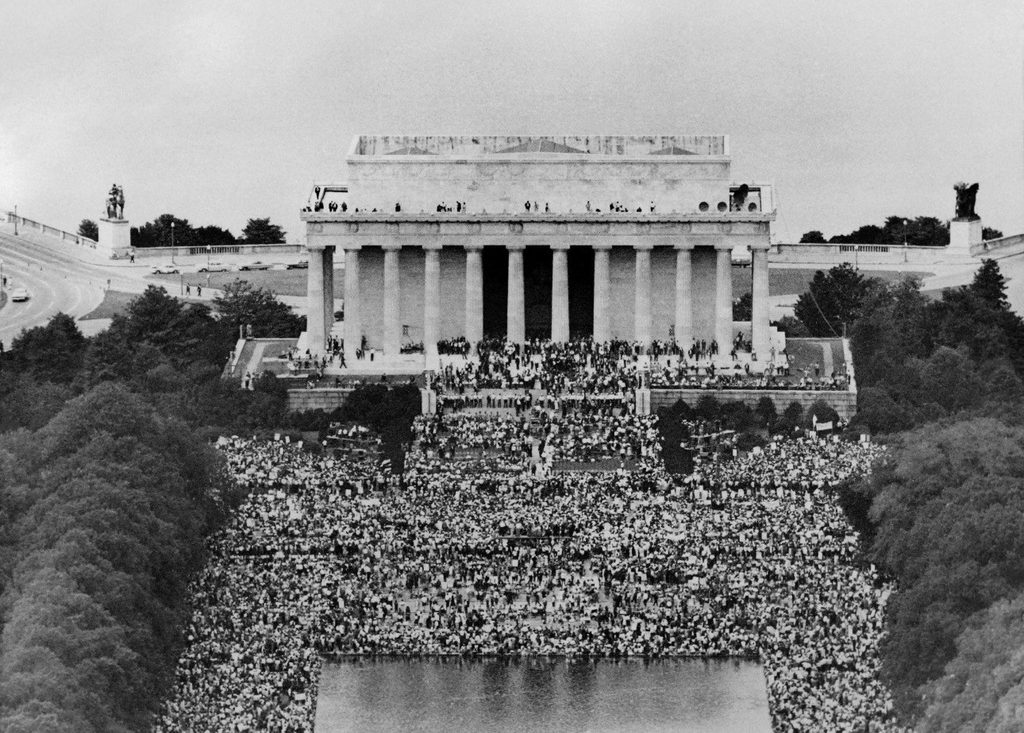
The civil rights movement forced the federal government to confront segregation and voter suppression more directly.
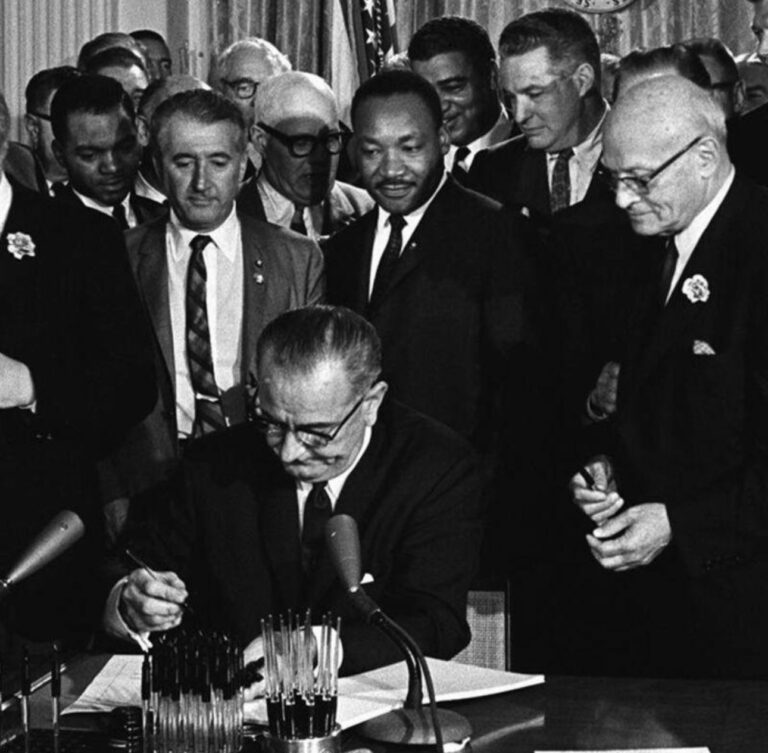
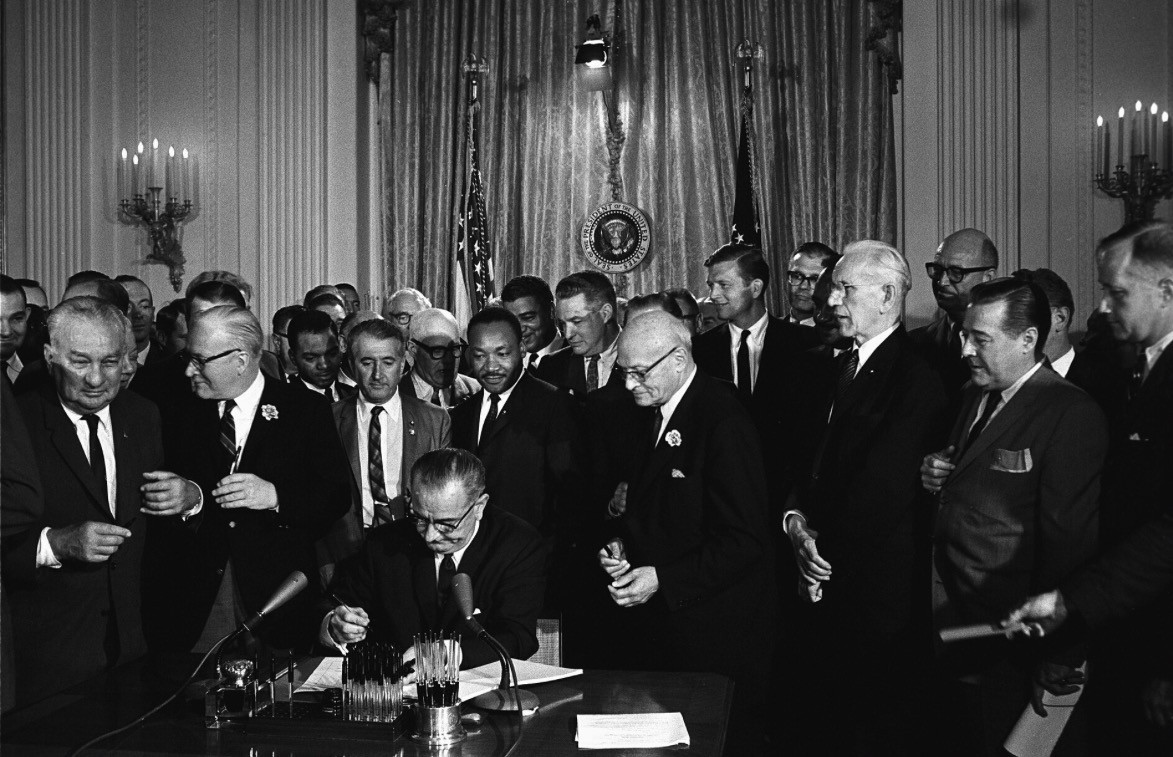
Democratic President Lyndon B. Johnson signed the Civil Rights Act of 1964, but the law’s passage depended on a bipartisan coalition. Southern Democrats led the Senate filibuster against it, while Democrats and Republicans worked together to overcome that opposition. Republican Senate leader Everett Dirksen played a significant role in securing the votes needed. (archives.gov, senate.gov, senate.gov)
That history challenges two oversimplifications: that Democrats uniformly supported civil rights, or that Republicans uniformly opposed them. Both parties contained competing factions, and region and ideology were essential to understanding where lawmakers stood.
Johnson’s civil rights agenda also intensified the movement of many white Southern voters away from the Democratic Party. Civil rights were a major force in the changing political relationship between the national Democratic Party and the white South. (millercenter.org)
What Was the Southern Strategy?
Republicans increasingly sought support among white Southern voters disillusioned with national Democrats. The “Southern Strategy,” associated especially with Richard Nixon’s political rise, involved appealing to those voters amid conflict over civil rights and racial change.
Appeals concerning states’ rights and law and order became part of this political environment. Race was a central element of that strategy. (apnews.com)
Some politicians changed parties directly. Strom Thurmond, for example, became a Republican in September 1964. His move is one of the clearest individual examples of the broader transformation. (senate.gov)
But one senator’s switch should not be confused with millions of people changing their political identities simultaneously.
Why “Realignment” Is the Better Description
Political realignment means changes in the relationship between voters, issues, and political parties. The history examined here includes several connected developments: Black voters moved toward Democrats during the New Deal, national Democrats embraced stronger civil rights protections, and Republicans gained opportunities among disaffected white Southerners.
These developments occurred at separate times. The Democratic split of 1948 and the bipartisan civil rights coalition of 1964 show why there is no single date when the parties simply traded places. The “Great Switch” is useful shorthand, but it becomes misleading when it suggests that every voter, politician, or policy follows the same path.
Why This History Matters
Political history should help us ask better questions. Which policies did a party support at a particular moment? Who benefited from those policies? Who was excluded? How did voters and leaders respond when the country changed?
Recognizing the Republican Party’s antislavery origins does not erase its later transformations. Recognizing the Democratic Party’s segregationist history does not erase the changes within its coalition.
An informed public can acknowledge both. Understanding political parties requires examining their actions across time and holding them accountable for the choices they make.
Sources and Further Reading
- U.S. Senate – Historical Overview of Political Parties Background on the Republican Party’s antislavery origins and the development of the two-party system.
- U.S. House of Representatives – Party Realignment and the New Deal Explains the movement of Black voters toward the Democratic Party during the New Deal era.
- Harry S. Truman Presidential Library – The Election of 1948 Discusses Truman’s civil rights agenda and the segregationist Dixiecrat breakaway.
- National Archives – Civil Rights Act of 1964 Provides the legislation and historical context surrounding its passage.
- U.S. Senate – Cloture and Final Passage of the Civil Rights Act of 1964 Explains the bipartisan cooperation needed to overcome the Senate filibuster.
- Miller Center, University of Virginia – Lyndon B. Johnson: The American Franchise Examines civil rights and changing political loyalties among white Southern voters.
- U.S. Senate – Senators Who Changed Parties During Senate Service Documents Strom Thurmond’s move to the Republican Party in 1964.